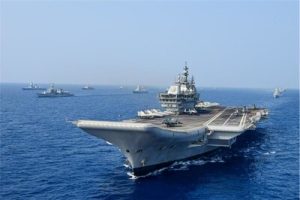

The ongoing global pandemic has not deterred China’s assertive maritime expansion in the East China Sea, South China Sea, and recently, the Indian Ocean. This aggressiveness has raised significant concerns among various nations. In response, the article proposes the establishment of a strategic chain of maritime hubs to counter China’s influence.
Recent incidents highlight this maritime tension. In April, a Vietnamese fishing vessel was reportedly sunk by a Chinese ship, prompting strong diplomatic backlash from the U.S. and support for Vietnam. The Philippines also expressed solidarity following a similar encounter with Chinese forces. Additionally, in May, a standoff between a Chinese survey ship and a Malaysian oil exploration vessel occurred within Malaysia’s exclusive economic zone. July saw Japanese territorial waters intruded upon by Chinese coast guard ships, which approached within 2.5 miles of the contested Senkaku Islands.
China’s military posture has expanded beyond East Asia. Satellite images indicate a modernized Chinese naval base in Djibouti and ongoing developments in the Maldives, signaling a strategic encirclement of India, reminiscent of the “string of pearls” strategy aimed at gaining influence over key maritime routes.
To address this challenge, the article suggests equipping ports and islands to serve as strategic outposts for monitoring naval activities. Vietnam’s Cam Ranh Bay stands out as a potential hub due to its strategic proximity to the South China Sea and robust logistics capabilities. The U.S. could enhance its operational capacity there, making it a cornerstone for countering China’s maritime maneuvers.
In the Indian Ocean, India’s Andaman and Nicobar Islands could act as a central node in this proposed maritime strategy. India’s ongoing developments, including setting up a naval air station and partnerships with Japan for undersea cables, enhance its role as a monitoring hub. These islands can aid in coordinating surveillance with other points like Cam Ranh Bay and Djibouti.
Djibouti itself is critical due to its existing Chinese military base and proximity to vital maritime chokepoints. The base’s location adjacent to U.S. and allied military installations creates a unique opportunity for cooperative defense and strategic planning among multiple nations, reinforcing a collective maritime security framework.
In conclusion, to effectively counter China’s maritime assertiveness, countries must collaborate beyond their traditional alliances. By developing a strategic chain of maritime hubs—integrating resources and surveillance capabilities—nations like the U.S., India, Japan, France, and Vietnam can enhance their collective security and influence in regional waters. This collaborative approach could also be explored in forums such as the Quad, inviting more nations to participate in safeguarding maritime freedom and stability.