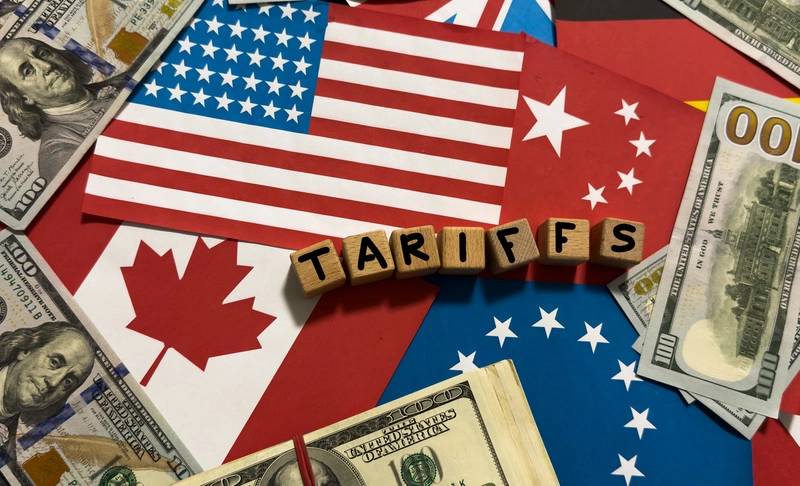
On Thursday, European Commission President Ursula von der Leyen announced that the European Union (EU) would pause its planned countermeasures against U.S. tariffs. This decision came in response to President Donald Trump’s sudden move to temporarily lower extensive tariffs he had imposed on various countries. Initially, the EU was set to impose counter-tariffs on approximately 21 billion euros ($23.25 billion) worth of U.S. goods, in retaliation for Trump’s 25% tariffs on steel and aluminum. While the EU is still evaluating its stance on U.S. auto tariffs and other ongoing 10% levies, von der Leyen stated that they would hold off on the countermeasures for 90 days to allow for negotiations, emphasizing a desire to give diplomacy a chance.
Trump’s decision to pause these tariffs brought relief to global markets, especially after a recent period of significant financial volatility that had eroded trillions from stock markets. Following his reversal, U.S. stock indexes surged, and positive market reactions extended into Asian and European exchanges. Trump’s earlier tariff hikes had been seen as aggravating a trade war with China, compounded by a significant increase in tariffs on Chinese imports from 104% to 125%. In response, China condemned the U.S. approach as threats and blackmail while affirming its commitment to retaliate if necessary.
Chinese officials indicated their intentions to uphold punitive tariffs, which stood at 84% on U.S. imports following Trump’s recent announcements. Though Trump has expressed a willingness to find a resolution with China, he seems focused on discussions with other nations like Vietnam, Japan, and South Korea, aiming to establish potential trade agreements. The Chinese yuan experienced its lowest valuation against the dollar since the global financial crisis, illustrating the strain from ongoing tensions.
In Europe, markets responded positively to Trump’s announcement, with government bond yields increasing and a decrease in expectations for European Central Bank rate cuts. Von der Leyen remarked that Trump’s tariff reversal aided in stabilizing the global economy but indicated that the EU would be prepared to reimplement their countermeasures if negotiations did not yield satisfactory results. The EU had initially planned to impose tariffs on a range of U.S. goods, including agricultural products and textiles, but those plans are now suspended.
Despite this temporary relief, uncertainty still looms, with some economists and central bankers expressing caution. European Central Bank policymaker Francois Villeroy de Galhau referred to the situation as “less bad news” but underscored ongoing risks to trust and economic growth. Trump himself acknowledged that the previous market turmoil had influenced his decision to suspend the tariffs, emphasizing the need for flexibility. Meanwhile, nations like India reiterated their interest in quickly negotiating trade agreements with the U.S., highlighting the shifting dynamics in global trade relationships amid ongoing tensions.
In summary, while the EU’s pause on countermeasures signifies a temporary reprieve, the complex web of international relations and tariffs continues to inject uncertainty into the global economic landscape.
Source link