
Summary of Global Crude Oil Transportation and Major Maritime Routes
Crude oil is a crucial energy source used in various sectors, including machinery, cosmetics, and paints. Approximately 61% of the world’s crude oil is transported via sea routes, connecting major oil-producing regions to global markets. This transportation primarily takes place through strategic maritime chokepoints, many of which are located in the Middle East, where the majority of oil production occurs.
Major Maritime Chokepoints
-
Hormuz Strait: This vital shipping lane, between Iran and Oman, is the most significant oil route globally, with an oil flow of about 21 million barrels per day in 2022. Around 80% of this oil is directed toward Asian markets like India, China, and Japan. The U.S. also imports a smaller amount of oil through this strait, although its overall purchases from Gulf nations have decreased in recent years.
-
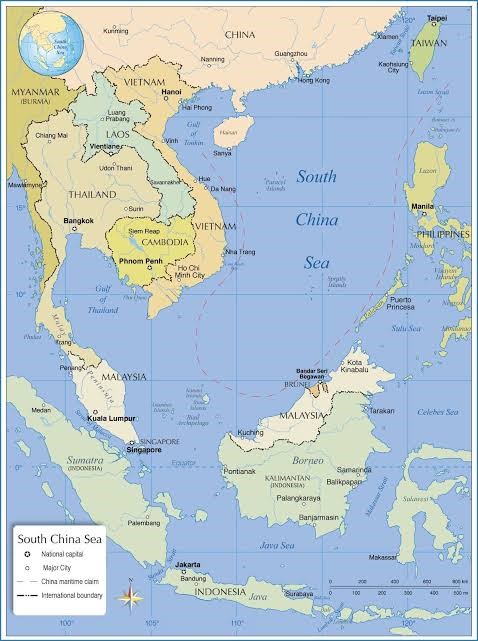
Malacca Strait: Located between Indonesia, Singapore, and Malaysia, the Malacca Strait serves as the shortest maritime link between Persian Gulf oil suppliers and Asian markets. With a narrowest width of just 1.7 miles, this strait is prone to accidents and piracy, making navigation risky.
-
Suez Canal: Linking the Red Sea and Mediterranean Sea, the Suez Canal is another critical oil transport route. It saw about 3.9 million barrels per day cross in 2016, facilitating oil shipments primarily from Iraq and Saudi Arabia to Europe.
-
Bab el-Mandeb Strait: This chokepoint connects the Red Sea to the Gulf of Aden and is vital for transporting petroleum exports from the Persian Gulf. Approximately 6.2 million barrels per day passed through this strait in 2018, intended primarily for U.S., Asian, and European markets.
-
Turkish Straits: This region, comprising the Bosphorus and Dardanelles waterways, connects the Black Sea to the Mediterranean. A considerable volume of oil from Russia and Kazakhstan flows through the Turkish Straits, with around 2.5 million barrels daily reported in 2016.
-
Danish Straits: These straits are significant for Russian oil exports, especially post-2005 when the Port of Primorsk became operational. Regulatory changes due to geopolitical tensions have recently impacted oil shipments through this route.
-
Cape of Good Hope: Strategically located at the southern tip of Africa, this route facilitates tankers destined for multiple global markets and serves as an alternative for vessels bypassing congested or threatened maritime chokepoints.
-
Panama Canal: This canal connects the Pacific and Atlantic Oceans and is crucial for U.S. oil shipments, with over 60% of its cargo bound for the U.S. It has recently seen fluctuations in traffic due to changing water levels.
-
Singapore Strait: This busy shipping route handles a third of global oil trade, primarily vital for Japan, which sources over 80% of its oil from this strait.
-
Gibraltar Strait: Connecting the Mediterranean Sea with the Atlantic, this strait sees around 6,000 crossings annually, with 30% being oil tankers.
Conclusion
Global crude oil transportation is an intricate web of routes and chokepoints, fundamentally impacting international trade and energy security. The strategic positioning of these maritime chokepoints, particularly in politically volatile regions, highlights the complexity of securing oil supplies for global economies. Understanding these routes is essential for comprehending the dynamics of the global oil market and the factors that influence prices and availability.