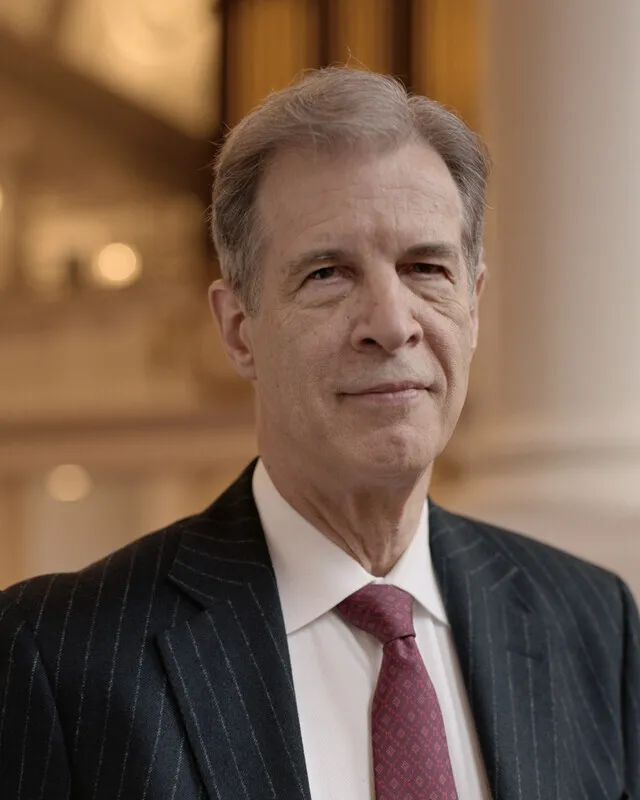
William Overholt, a senior research fellow at Harvard’s Kennedy School, believes that China is primarily responsible for the escalating conflict between the US and China. In an interview with the Hankyoreh, he emphasized that this deterioration in relations is likely to persist regardless of the outcome of the upcoming US presidential election, unless China undergoes a fundamental change in its approach.
Overholt outlined several pressing concerns contributing to US-China tensions, including intellectual property theft, market accessibility issues, and China’s assertive maritime activities. He criticized the Trump administration for focusing on politically motivated issues, neglecting to address these critical challenges adequately. He pointed out that while Trump has exacerbated tensions with his rhetoric, President Xi Jinping has also failed to deliver on promised economic reforms and has adopted a more aggressive international stance, especially with his “Wolf Warrior” diplomacy.
The worsening dynamics between the two nations are not solely attributed to domestic politics but stem from a broader bipartisan consensus in the US that views China as increasingly aggressive on multiple fronts, including severe human rights abuses and economic practices detrimental to foreign businesses. As a result, he anticipates that regardless of the election outcome, tough policies toward China will continue to be a shared stance among US lawmakers.
Overholt does not foresee the current tensions evolving into a full-blown Cold War, arguing that trade and investment levels are still significantly higher between the US and China than they were during the Cold War with the USSR. However, he acknowledges a potential escalation should China take military action against Taiwan.
The situation is particularly complex for South Korea, which faces pressure to align more closely with either the US or China. Overholt believes that Korea should strategically maintain strong connections with both nations, leveraging its economic ties to China while relying on the US for security. He insists that Korea is in a robust position as both major powers recognize its importance.
Regarding the invitation for South Korea to join the G7, Overholt argues that the nation should not partake in a gathering oriented against China. More broadly, he expresses skepticism about the US’s Economic Prosperity Network (EPN) initiative as a sufficient response to China’s Belt and Road Initiative, suggesting that Korea should prioritize its national interests and strategic partnerships over mere alignment with US-led initiatives.
In summary, Overholt asserts that for Korea, maintaining internal unity and economic strength is critical. As tensions rise globally, the nation must navigate its relationships with both superpowers wisely to secure its interests.