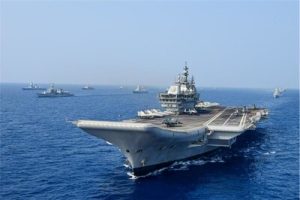

India’s security landscape has traditionally been dominated by land-based threats from Pakistan and China. However, since the early 21st century, there has been a notable shift towards a maritime-centric security strategy. This change has been influenced by several factors, most significantly the 2008 Mumbai terror attacks, which underscored the vulnerabilities posed by maritime infiltration. In response, India has integrated its Coast Guard into the Navy to streamline maritime security efforts.
The strategic importance of the Indo-Pacific region has emerged, positioning India as a pivotal player in evolving regional dynamics. By 2025, India will chair crucial forums like the Indian Ocean Rim Association (IORA) and the Indian Ocean Naval Symposium (IONS), signaling its enhanced role in maritime governance and security. These platforms allow India to foster cooperation on shared maritime interests, addressing regional challenges such as piracy, climate crises, and maritime terrorism.
Despite geographical vastness and diverse strategic interests complicating regionalism in the Indian Ocean, collective action remains essential. India’s leadership in previous IORA and IONS initiatives has already shown progress, particularly during its chairmanship from 2011-2013, where key focus areas were established for collaboration.
As India prepares for its 2025 leadership role, it must prioritize synergies in addressing maritime challenges while leveraging the Quad alliance to promote a free and inclusive Indo-Pacific order. This strategic recalibration could redefine India’s position as a principal security partner in the region, addressing both local and global maritime concerns. Overall, the developments anticipated in 2025 may symbolize a crucial moment for India’s maritime strategy.
Source link