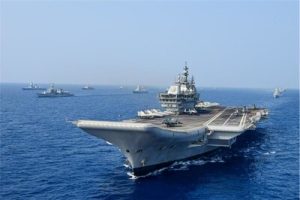

Indonesia has established a new military base on the Natuna Islands, strategically located near the contested South China Sea. This development, which began last month and is manned by over 1,000 personnel, aims to bolster Indonesia’s maritime sovereignty and deter incursions by Chinese fishing boats and their coast guard, amidst China’s expanding territorial claims.
The Indonesian government’s push for this base can be traced back to a budget allocation by the House of Representatives in 2016, which recognized the importance of asserting control over the nation’s natural resources in the region. Since 2014, Indonesia has taken a hard stance against illegal fishing, especially from Chinese vessels, which have often entered its exclusive economic zone (EEZ). Scholars suggest that the base will not only enhance monitoring and response capabilities but also aid in establishing Indonesia’s claim to the Natuna Islands in potential future legal disputes.
The South China Sea is hotly contested by several nations, including Brunei, Malaysia, Taiwan, the Philippines, and Vietnam. While China claims vast areas of this region, it does not formally claim the Natuna Islands. However, in 2016, the Chinese foreign ministry invoked “historic rights” to justify its fishing activities near these islands, provoking tensions. Indonesia’s frustration over its limited naval power and repeated incursions by foreign fishing vessels, particularly from China, has led to confrontations in the past, including burning foreign fishing boats as a warning.
The establishment of the base is seen as a proactive measure to prevent further encroachments and ensure that Indonesia can effectively monitor its waters. Experts note that having an outpost on the Natuna Islands provides Indonesia with a vantage point to oversee Chinese fishing activities and respond quickly to violations. This move aligns with President Joko Widodo’s broader agenda to reinforce Indonesia’s maritime defense capabilities against illegal fishing and piracy.
China may be dissuaded from aggressive actions in the area by the presence of Indonesia’s military base. Despite its desire for fishing rights and potential energy resources in the region, analysts suggest that the risk of confrontation could temper Beijing’s ambitions. The competition for these resources has been a long-standing source of tension in the South China Sea.
Moreover, in 2022, Indonesia further solidified its claim by renaming part of the disputed maritime territory as the North Natuna Sea, which faced backlash from China, underscoring the fragility of regional diplomacy. As Indonesia strengthens its military presence, it also aims to assert its rights over the waters disputed under China’s nine-dash line claim.
In conclusion, the Natuna Islands military base represents a significant step for Indonesia to safeguard its maritime interests and reinforce its sovereignty against unauthorized fishing activities, particularly from China. This initiative is a vital part of Indonesia’s wider strategy to establish effective control over its maritime domain, ensuring regional stability amidst rising tensions in the South China Sea.