Tanger Med Port: A Global Logistics Hub Ambitions
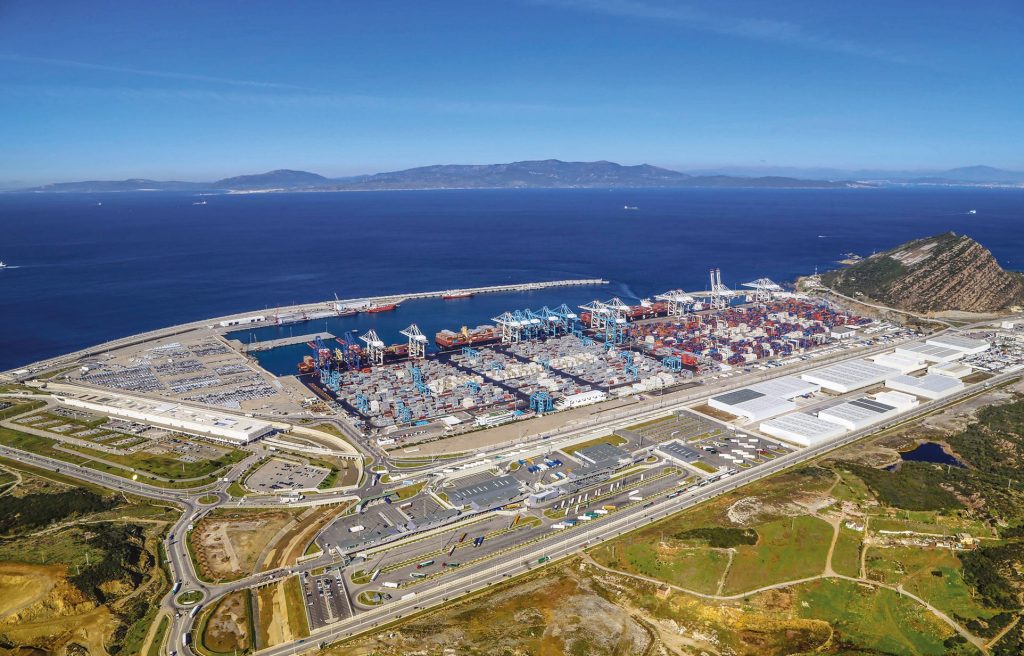
Tanger Med Port, strategically located on the Strait of Gibraltar, serves as a critical global logistics hub connecting major maritime routes. The port complex is expansive, covering over 1,000 hectares with three distinct ports: Tanger Med Port, Tanger Med Port for passengers, and Tanger Med 2 Port. It boasts substantial annual handling capabilities, processing over 9 million containers, 15 million tonnes of oil and gas, and welcoming 7 million passengers. Since its inception, the port has attracted 103 billion dirhams (approximately 9.8 billion euros) in investments, becoming the largest container port in the Mediterranean and solidifying its leadership in Africa for the past four years.
Initially conceived under the vision of King Mohammed VI in 2003, Tanger Med was intended to be an “integrated model of regional development” and a key player in international trade. Today, it functions as a vital maritime hub for major shipping alliances and a transshipment center for intercontinental routes, handling around 40% of its container traffic. The port is backed by prominent names in shipping and logistics like Maersk, CMA-CGM, and DHL, further establishing its reputation.
Moving forward, the port aims to solidify its role as a premier shipping hub with a vision to rank among the world’s top 20 shipping hubs. Plans include enhancing productivity and competitiveness, expanding logistics capabilities, and developing industrial and agro-food export corridors from Africa to Europe. The establishment of business parks is a priority, catering to multinational corporations in sectors such as automotive and logistics that seek operational bases within Tanger Med’s industrial platform.
Tanger Med’s global connectivity reinforces its strategic significance. It connects to over 180 ports in 70 countries weekly, enabling efficient import and export logistics. Its proximity to Europe is particularly advantageous, with short-distance links to ports in Spain, France, and Italy. Additionally, the port bolsters its capabilities with a robust road and railway network to facilitate goods movement across Morocco.
Environmental sustainability remains a central focus for Tanger Med. The implementation of systems like the Station Marpol for waste treatment and water recycling underlines its commitment to sustainable practices. The port’s energy efficiency initiatives, such as LED installations, have led to recognition with the PERS-certified EcoPorts certification—making it a leader in environmentally-friendly operations among non-European ports.
In terms of operational efficiency, Tanger Med ranks favorably among Mediterranean ports. Achieving record container handling volumes, it has positioned itself to be a powerhouse in container and truck traffic. Continuous advancements in port-call optimization and security measures are conducive to improved vessel turnaround times and safety standards.
The industrial platform affiliated with Tanger Med spans 2,000 hectares, hosting over 1,100 companies with a business volume exceeding 59 billion dirhams (5.3 billion euros). The platform is notable for its vast array of services and high-standard infrastructure, attracting significant foreign investments.
Looking ahead, as maritime transportation and trade evolve—especially amid the post-COVID landscape—Tanger Med is poised to adapt. With the Mediterranean’s pivotal role in global trade, the port is set to leverage emerging trends like e-commerce and shifts in logistics to solidify its position as a central player in international maritime dynamics.