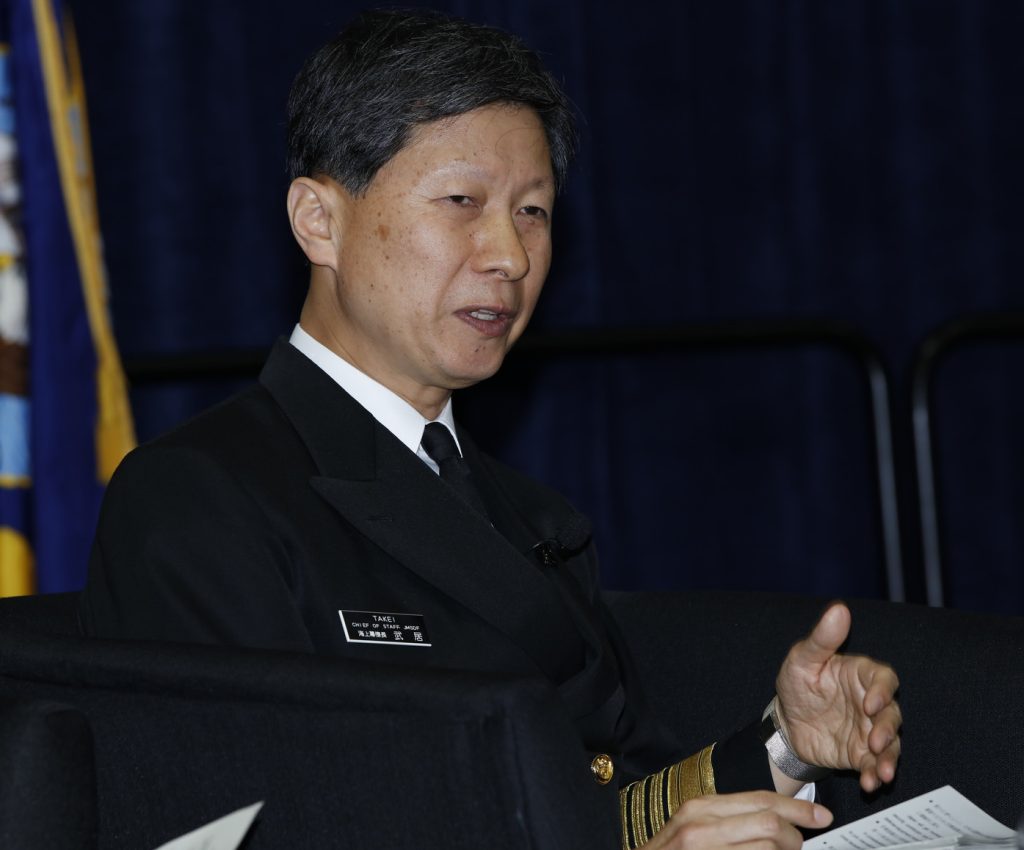
Adm. Tomohisa Takei, chief of the Japan Maritime Self-Defense Force (JMSDF), emphasized the growing importance of U.S. cooperation in enhancing Japan’s defense capabilities during a defense conference on February 18, 2016. He highlighted evolving security landscapes in the Asia-Pacific region, including the modernization of China’s military, North Korea’s missile advancements, and increased naval activity from Russia. Concurrently, Takei underscored the necessity of maintaining a strong partnership with the U.S. Navy, suggesting that Japan should integrate the latest technologies and tactics from its American counterpart to reinforce its defensive posture.
Takei articulated two primary domestic challenges impacting Japan’s defense strategy: an aging population and constrained government budgets. He noted that the youth demographic is shrinking, making recruiting new personnel increasingly competitive, especially against the private sector. Additionally, Japan’s defense industry is relatively small, with less than 10% of its business focused on defense, hindering robust investment in military capabilities. There is also public opposition to weapons exports, which complicates potential collaborations for developing new defense systems.
Despite these hurdles, Takei sees possibilities for cooperative development between Japan’s defense sector and U.S. military manufacturers. While Japan possesses advanced technologies, it often lacks the experience in joint development projects, especially regarding security information management. He suggested that Japan could serve as a valuable partner for U.S. industry, particularly in communications and information technology sectors.
China’s military modernization remains a focal concern for Japan. Takei acknowledged that while China is a significant regional player, its opaque military expansions and assertive actions in the South China Sea raise alarms among neighboring countries. He reiterated Japan’s commitment to resolving such issues through peaceful means and adherence to international law, supporting U.S. freedom of navigation operations despite Chinese objections.
The JMSDF has evolved significantly since its establishment in 1952, transitioning from the Imperial Japanese Navy’s blue-water force to a self-defense-oriented force. Given the escalating threats, particularly from China, Japan is revising its security policy and adapting military operations. Strong cooperation and interoperability with the U.S. are deemed crucial, particularly in enhancing command, control, communications, computers, and intelligence (C4I) systems.
Takei stressed the need for integrated C4I networks to support seamless operations between the JMSDF and the U.S. Navy, warning that failure to adapt could create gaps in military collaboration. He drew a metaphor comparing the U.S.-Japan alliance to a flower requiring ongoing care, emphasizing the importance of mutual support during crises, such as the U.S. Navy’s humanitarian response following Japan’s 2011 disaster. In conclusion, Takei underscored that interoperability is essential for a tightly connected naval relationship, which ultimately fortifies the U.S.-Japan alliance in an increasingly complex security environment.