
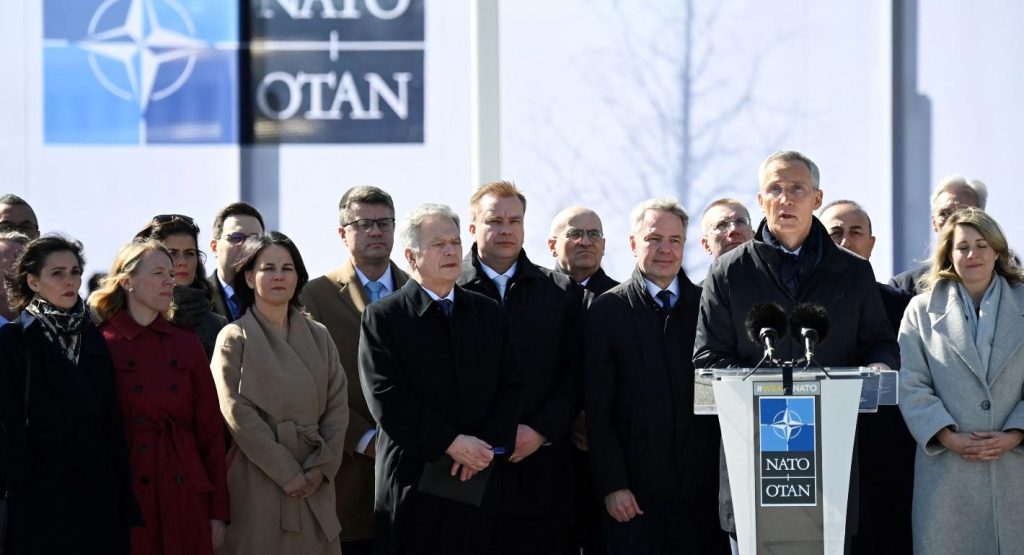
The article discusses NATO’s recent Nordic enlargement, which sees Finland and Sweden joining the alliance, marking a significant shift in Northern European security dynamics. This development comes as Russia’s aggressive actions—including its war in Ukraine and increased militarization of the Arctic—reshape European security landscapes and compel NATO to rethink its collective defense strategies.
Finland’s membership is particularly impactful given its substantial military capabilities, including a well-trained force of around 280,000 personnel and a reserve of 900,000 conscripts. Their artillery strength and modern air force, including the transition to F-35s, significantly bolster NATO’s deterrent posture in Northern Europe. Sweden, while having downsized its military post-Cold War, maintains modern forces and strategic geographic advantages, making the Baltic Sea nearly entirely NATO territory. This geographical advantage simplifies troop movements and strengthens defense of Baltic states against potential Russian aggression.
Historically, Northern Europe was considered a peripheral area for Eastern and Western European great powers, but with the membership of multiple nations, it has become a frontline region for NATO amid rising tensions with Russia. The conventional wisdom around NATO’s collective defense has shifted; there is now a need for innovative defense strategies, joint operational planning, and updated command structures, particularly in light of the increasing threat from Russia.
Since Russia’s annexation of Crimea in 2014, NATO has recognized shortcomings in its collective defense, leading to the establishment of a “tripwire” enhanced forward presence in the Baltic states. Following the full-scale invasion of Ukraine in 2022, NATO’s focus has transitioned toward a more proactive “deterrence by denial” strategy. This reflects a comprehensive approach to bolster defenses throughout Northern Europe and reinforces the collective security of member states.
NATO must also prioritize the protection of maritime critical infrastructure in Northern Europe, particularly in light of the vulnerabilities exposed by threats such as the sabotage of the Nord Stream pipelines. The need for tailored defense strategies based on the unique geographical and military realities of the region is emphasized, promoting a division of labor among member nations.
A new typology of NATO members—frontline nations, hubs, security providers, and security guarantors—facilitates clearer delineation of roles in deterring Russian aggression. This logic aims to establish a “deterrence-by-denial bubble” through improved air and missile defense systems and readiness through joint operations and exercises. Northern European allies must work collaboratively to strengthen integrated defense planning, enhancing their interoperability.
To effectively support the strategic importance of Northern Europe in the broader Euro-Atlantic security framework, NATO must implement cohesive command structures that recognize the interconnected nature of the Baltic Sea, Arctic, and North Sea regions. Consideration of reestablishing historical command, such as the Headquarters Allied Forces Northern Europe (AFNORTH), could enhance regional cooperation and address the unique defense needs of Northern Europe.
In conclusion, the Nordic enlargement presents a critical opportunity for NATO to solidify its collective defense capabilities in Northern Europe, necessitating robust coordination among allies. Enhancing political-military consultations and integrated defense planning will be essential in ensuring that Northern Europe plays a vital role in maintaining overall stability within the Euro-Atlantic region.
Source link