
The year 2012 marked a significant period of leadership transitions and escalating territorial disputes in Northeast Asia. Key developments began with Japan, where Shinzo Abe from the Liberal Democratic Party (LDP) assumed office as Prime Minister on December 26, 2012, following a decisive election. In his inaugural remarks, Abe warned about the growing assertiveness of China in the South China Sea, suggesting that it risked becoming a “Lake Beijing.” He proposed the formation of a “democratic security diamond” comprising Japan, the U.S., India, and Australia, aimed at safeguarding maritime stability across the Indian Ocean and Western Pacific.
Simultaneously, China experienced a leadership transition during November, electing Xi Jinping as president and Li Keqiang as premier. China’s military strategy underwent a notable shift towards maritime power, with its new leaders strengthening naval agencies and emphasizing maritime claims as core national interests.
In South Korea, the election of Park Geun-hye in February 2013 as the first female president occurred amid rising tensions over North Korea’s nuclear program. This pattern of heightened nationalistic sentiments and regional tensions was further underscored by several significant incidents throughout 2012.
One such incident was the Scarborough Shoal standoff between the Philippines and China, which escalated in April 2012 when the Philippines sent a warship to confront Chinese fishermen. This led to a standoff lasting two months and provoked a decline in diplomatic relations. China retaliated by restricting imports of Philippine fruits and warning against tourism to the country, significantly impacting the Philippines’ banana export revenues.
In June, Vietnam enacted a maritime law asserting its jurisdiction over the disputed Spratly and Paracel Islands, prompting a stern response from China that included the establishment of a new administrative city in Sansha to oversee these territories. Despite fluctuating relations, Vietnam’s defense budget surged, reflecting its growing military preparations in the face of Chinese assertiveness.
Diplomatic efforts in regional forums faced challenges, illustrated by ASEAN’s failure to produce a communiqué at its annual meeting for the first time in history, primarily due to disagreements on territorial issues involving China.
Japan’s controversial purchase of disputed islands, known as the Senkaku/Diaoyu Islands, in September 2012 further intensified tensions with China, resulting in widespread anti-Japanese protests across Chinese cities. This escalation included China’s declaration of territorial sea baselines around the islands and increased maritime patrols, effectively challenging Japan’s administration of the contested waters.
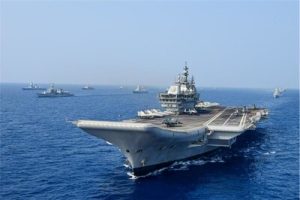
In another notable development that September, China launched its first aircraft carrier, the Liaoning, marking a step in its naval modernization efforts—a move viewed as a signal of the country’s ambitions in the global maritime domain.
Overall, the leadership changes and territorial disputes of 2012 in Northeast Asia set the stage for greater tensions as nations navigated complex relationships, marked by nationalist fervor and mutual distrust. The responses from Japan, China, the Philippines, and Vietnam highlighted the challenges of fostering regional stability amid rising nationalism and military assertiveness.