
Summary of the Recent ASEAN Defence Ministers Meeting Address by India
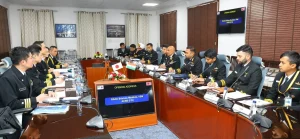
At the recent 8th ASEAN Defence Ministers Meeting (ADMM) Plus, India’s Defence Minister emphasized the critical issues of maritime security and the necessity for a rule-based order in the Indo-Pacific region. The meeting, attended by ASEAN and its eight Dialogue Partners, highlighted India’s concerns over freedom of navigation, particularly in the South China Sea, which has become the focal point of maritime security challenges due to China’s assertive behaviors.
India’s call for a “free, open, and inclusive Indo-Pacific” aims to foster respect for sovereignty and encourage peaceful dispute resolution. The Defence Minister reinforced India’s commitment to supporting freedom of navigation and unimpeded commerce through international waterways, advocating for ASEAN-led mechanisms as pivotal platforms to realize a shared Indo-Pacific vision.
China’s actions in the South China Sea and its disregard for international norms have raised alarms not only in India but globally. Notable nations, including those in the Quadrilateral Security Dialogue (QUAD), have echoed concerns about China’s growing influence and military assertiveness, with recent military tensions accentuating the threat to regional peace.
The South China Sea holds significant geopolitical importance, serving as a major conduit for global shipping and rich in natural resources. According to UNCTAD, a third of global shipping transits through these waters, underscoring its stakes for both economic and strategic considerations.
China’s approach to the Indo-Pacific, contrasting with India’s inclusive vision, employs dual strategies for the Indian and Pacific Oceans. While using “full spectrum dominance” in the Western Pacific, it adopts a subtler “stakeholdership” approach in the Indian Ocean to gradually enhance its influence. This dual strategy is reflected in the Belt and Road Initiative and military maneuvers, allowing China to assert its interests while minimizing Indian and international pushback.
Global responses to China’s conduct have varied. NATO countries have expressed dissatisfaction over China’s violations of established international frameworks, while QUAD nations have openly labeled China as a security threat. The G7 countries face complexities due to economic ties with China but remain vigilant regarding its military expansions and incursions, especially concerning Taiwan and regional maritime rights.
Going forward, collaborative action among developed democratic nations is essential to counter China’s authoritarian influence and address regional threats such as those in Xinjiang, Taiwan, and the South China Sea. For India, a multifaceted strategy combining military readiness, infrastructural development, and technology enhancement is vital in asserting its presence in the Indian Ocean and maintaining stability in the Indo-Pacific.
India’s emphasis on collective counter-terrorism efforts highlights a recognition of the interconnected threats that transcend borders, necessitating global cooperation to disrupt terrorist networks effectively. Moreover, adapting to cyber threats requires a comprehensive and democratic governance structure to safeguard against increasingly sophisticated cyberattacks.
In conclusion, the maritime security challenges presented by the South China Sea and the broader Indo-Pacific region call for coordinated efforts among like-minded nations. While there is reticence to confront China directly, the strategic dialogue initiated at meetings like ADMM-Plus is integral to building a unified response to these pressing geopolitical challenges.