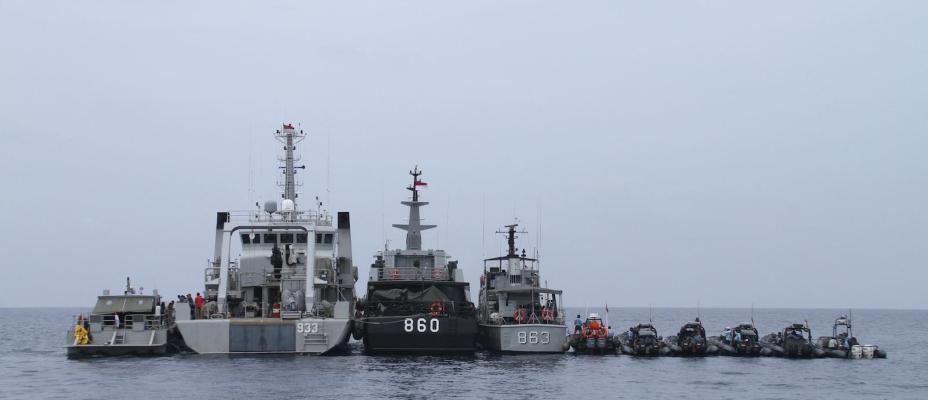
In recent years, East Asian coastal states have increasingly confronted challenges at sea, including illegal, unreported, and unregulated fishing, transnational crime, and unilateral maritime claims, particularly related to the South China Sea. To counter these threats, states are modernizing their military and civilian maritime capabilities and updating laws, often driven by domestic pressures to reassert control over their waters.
China has emerged as the dominant player in this arena, expanding its Coast Guard to bolster its claims over disputed maritime territories, resulting in heightened tensions with neighboring states. In response, these states have improved their own maritime enforcement capabilities, seeking to uphold their rights under international law despite China’s aggressive posture.
The responses from East Asian nations are often characterized by a nationalist approach, reflecting a desire to project domestic authority and restore perceived law and order at sea. However, this creates friction and signifies broader challenges to maritime stability. The potential resolution to these disputes lies within existing international law, particularly the United Nations Convention on the Law of the Sea (UNCLOS), which provides a framework for resolving competing jurisdictional claims. Promoting adherence to UNCLOS is seen as vital for maintaining maritime order, but there is also a need to balance unilateral national actions with a commitment to internationalism.
To foster a more stable maritime environment, it is critical to educate not just government officials but also the general public about the benefits of adhering to the rules established by UNCLOS. Increased awareness can help demystify complex maritime policies and enable citizens—especially those whose livelihoods depend on the sea—to understand the rationale behind their governments’ actions. This could pave the way for a more cooperative approach among nations and mitigate nationalist tendencies.
The growth of information and communication technology has facilitated a heightened public interest in maritime issues, yet it has also resulted in polarized national perspectives that may overlook the nuances of international law. As such, promoting an internationalist worldview and encouraging a sense of community among nations becomes essential.
The Association of Southeast Asian Nations (ASEAN) is facing these challenges through its community-building initiatives, albeit with varying degrees of success. Differences in political solidarity and socio-cultural connections within ASEAN have hindered progress, especially compared to the advances achieved in economic linkages.
Countries like Australia and the United Kingdom can aid the popularization and internationalization of maritime law by investing in education, media initiatives, and the sustainable development of the “Blue Economy.” These efforts can contribute to strengthening the existing maritime order and counteracting unilateral actions that threaten it.
Ultimately, smaller East Asian states appear to prefer an idealist and multilateral legal framework, as represented by UNCLOS. Efforts to support this framework are likely to resonate favorably with these nations in the future.
Source link