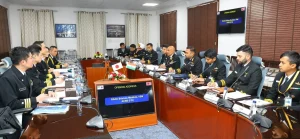

On Wednesday, President Ferdinand Marcos of the Philippines oversaw the signing of the Implementing Rules and Regulations (IRR) for the Magna Carta of Filipino Seafarers Act, marking a significant step forward for the country’s maritime workforce. The agreement was signed by Department of Migrant Workers Secretary Hans Leo Cacdac and Maritime Industry Authority Administrator Sonia Malaluan during a special ceremony.
Marcos acknowledged the extensive efforts by government officials to finalize the regulations, referring to the intricate work involved, which included numerous last-minute adjustments. He expressed optimism about the approval of the IRR, emphasizing its importance for the implementation of workers’ rights outlined in the Magna Carta for Seafarers. The IRR was developed over three months, incorporating feedback from various stakeholders, including government agencies, maritime industry members, training institutions, non-governmental organizations, and civil society groups.
The IRR, consisting of 22 rules, is being enacted nearly four months after the Magna Carta was signed into law in September of the previous year. The signing of the bill had previously faced delays due to controversies surrounding provisions related to legal cases involving seafarers and maritime training. The IRR provides the necessary framework to operationalize the Magna Carta’s provisions.
One of the notable features of the IRR is the establishment of one-stop-shop centers specifically designed for seafarers, aimed at streamlining processes and reducing bureaucratic obstacles. Marcos highlighted that the Magna Carta and the IRR ensure fair medical treatment and access to free legal representation for seafarers, particularly during vulnerable moments like illness or legal struggles. This support is intended to safeguard the rights and well-being of seafarers.
Additionally, the reforms aim to boost the competitiveness of the maritime workforce by enhancing access to advanced training and requiring maritime educational institutions to adopt cutting-edge facilities. This initiative seeks to better equip Filipino seafarers and cadets to compete in the global maritime industry.
In closing, Marcos urged various governmental departments and agencies to expedite the issuance of remaining guidelines necessary for the law’s full implementation. He emphasized the importance of monitoring the maritime sector to ensure compliance by all stakeholders, reinforcing that the provisions of the law and the IRR should not merely exist on paper but serve as a solid foundation for the benefits of Filipino seafarers.
Source link