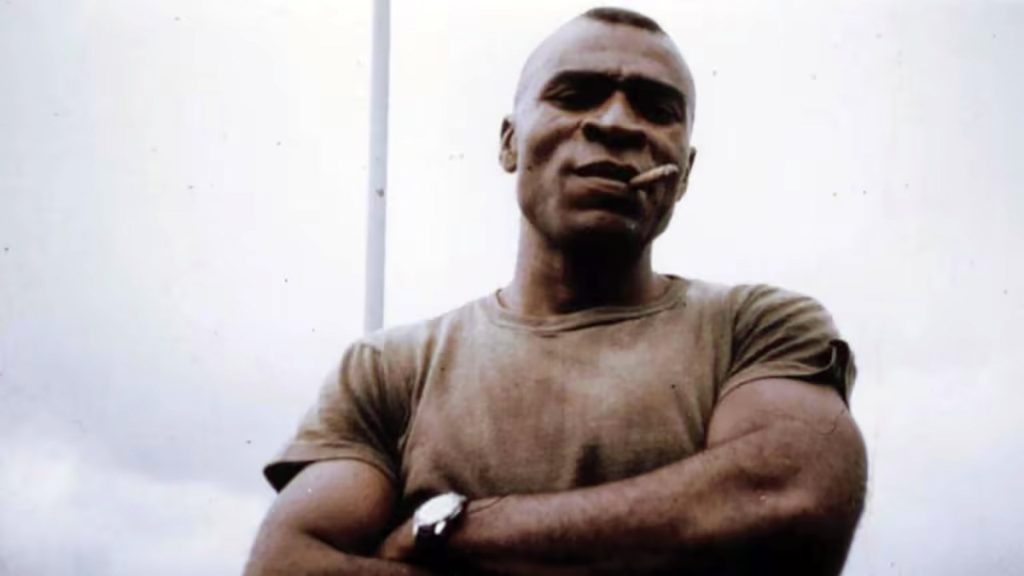
In April 1967, Marine 2nd Lt. James Capers Jr. demonstrated extraordinary courage during an ambush in South Vietnam, despite suffering multiple wounds from shrapnel and bullets. The ambush, initiated by hidden explosives, severely injured Capers, causing significant bleeding and a broken leg. Nevertheless, he remained resolute, ordering a mortar strike to protect his nine-man reconnaissance team and leading them towards a helicopter landing zone.
When the helicopter arrived, Capers showed unwavering loyalty by insisting that the team’s military working dog accompany them. Even amidst the chaos and his own injuries, he attempted to leave the helicopter twice to lighten the load, needing to be restrained by the crew each time. Eventually, he and his team were evacuated and transported to a hospital, where he began a long recovery process. Capers later retired as a major and received the Silver Star in 2010 for his “bold leadership, undaunted courage, and complete dedication to duty.”
Despite his commendable actions, Capers has yet to receive the Medal of Honor, an oversight Rep. Ralph Norman (R-S.C.) is attempting to rectify with new legislation. This bill aims to waive the standard requirement of receiving the honor within five years of the action. Norman praised Capers as a “living legend” deserving of the highest military recognition. Previous attempts at similar legislation have failed, attributed to “administrative shortcomings” hindering Capers’ nomination.
Capers reflected on the past in an interview, noting the racial challenges faced by African American servicemen during the Vietnam War. He was the first Black Marine to lead a reconnaissance company and to receive a battlefield commission. His contributions to combat included tactical maneuvers that misled the enemy about troop size and direct confrontations that showcased his resilience and skill.
A group of 47 lawmakers recently sent a letter advocating for Capers to receive the Medal of Honor, recognizing his exemplary service and contributions as a leader. They described him as embodying the highest traditions of the United States Armed Forces.
Now 87 years old, Capers lives alone, grappling with the loss of his wife and son, both of whom passed away in the 2000s. He downplays his heroism, insisting he was merely doing his job as a Marine. He believes his survival is thanks to the support of his family and comrades, reflecting a deep sense of humility and service. His enduring legacy as a courageous leader continues to inspire recognition and respect long after his service in Vietnam.
Source link