
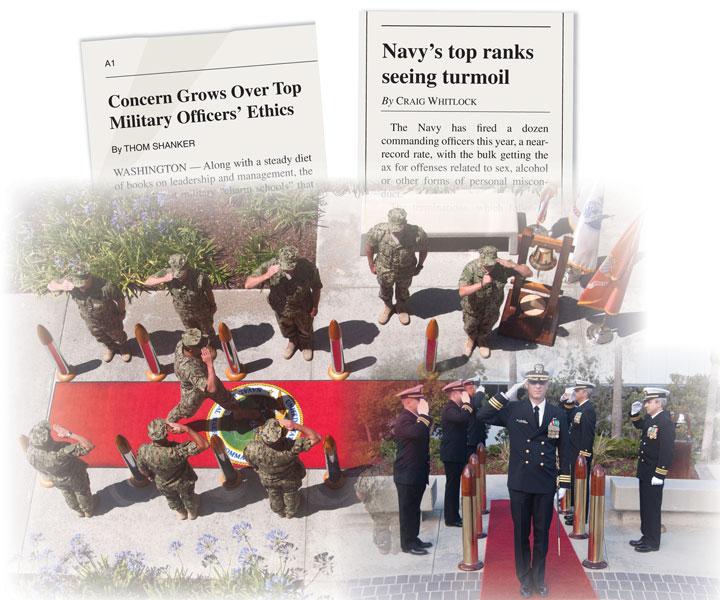
Recent issues involving naval officers relieved for cause spotlight a concerning trend of ethical violations and personal misconduct within the Navy. The frequency with which these incidents are reported may skew junior officers’ perceptions of their senior leaders and their own susceptibility to similar failings. While statistics demonstrate that only a small percentage of commanding officers (COs) face relief for cause—about 1.5% in 2011—these events nonetheless pose serious implications for command climate and morale among sailors. For example, Secretary of the Navy Ray Mabus revealed that only 12 out of approximately 1,500 commanding officers had been relieved at that time. However, those figures could be more alarming when viewed through the lens of ship commanding officers, where the relief rate was nearly 4.7%.
Despite illustrating high success rates, these rare incidents can severely disrupt operations and erode trust within commands. Remedies offered after investigations by the Naval Inspector General (NAVIG) have emphasized the need for moral conduct, yet they often fall short of addressing the root causes of personal misconduct. Many of the recommendations from prior studies failed to yield significant improvements, indicating a possible disconnect between proposed solutions and the effectiveness of current training programs.
The prevailing theories attributing ethical failings to “bad apples” or weak moral character are increasingly challenged. Psychological research supports the idea that situational factors play a crucial role in ethical decision-making. Stanford psychologist Dr. Philip Zimbardo’s studies, particularly the “Stanford Prison Experiment,” showcase how ordinary individuals can commit unethical acts in a problematic environment. The so-called “Bathsheba Syndrome,” which suggests that a person’s success can lead to ethical lapses, further complicates the narrative by indicating that ethical behavior cannot be assured even among those with strong characters.
In light of this, it is essential to foster a culture of introspection and moral development throughout an officer’s career, rather than only during formal training sessions before command. Proactive efforts to incorporate ethics into the fabric of service life can guide future leaders to recognize their potential vulnerabilities to misconduct. Leadership training should encourage deep personal reflection, helping officers internalize ethical principles and apply them in real-world situations.
To build a strong ethical framework, officers should engage with philosophical teachings early in their careers, participate in discussions about ethical challenges, and continually assess their decision-making processes against high ethical standards. This comprehensive preparation will equip officers to avoid situations that could lead to ethical failings, thereby reducing instances of relief for cause and ensuring a healthier command climate for sailors. Ultimately, instilling a habit of ethical excellence requires ongoing commitment and practice, focusing on character development that aligns with Navy standards.
Source link