The global sea shipping industry is currently facing significant challenges as uncertainty grows due to new tariffs imposed by US President Donald Trump. These tariffs, nearing 54% for China and a minimum of 10% on exports from several countries, are expected to disrupt trade flows and dampen transport demand from key Asian market players, including China, Vietnam, Japan, South Korea, and Taiwan. Analysts from Bloomberg Intelligence suggest that these tariffs will adversely affect freight rates and shipping companies like NYK, Cosco, and Maersk.
The onset of these tariffs, which began to be enforced starting April 9, has raised fears of a potential trade war, with China already retaliating by imposing a 34% tariff on US imports. This escalation of tariff measures could lead to higher import costs for the US, impacting demand for exports. Judah Levine from Freightos Group notes that the broad nature of the tariffs offers few alternatives, meaning US import costs will inevitably rise. Ultimately, this increase will likely result in a decrease in demand for US exports, which could adversely affect US agriculture and manufacturing sectors.
Many US importers have preemptively increased their inventory levels in anticipation of these tariffs, leading to temporarily higher cargo volumes. However, analysts speculate that once the initial rush is over, many importers will reduce or halt orders, potentially dropping container volumes and rates significantly. This could create a subdued peak shipping season similar to trends observed in 2018 and 2019.
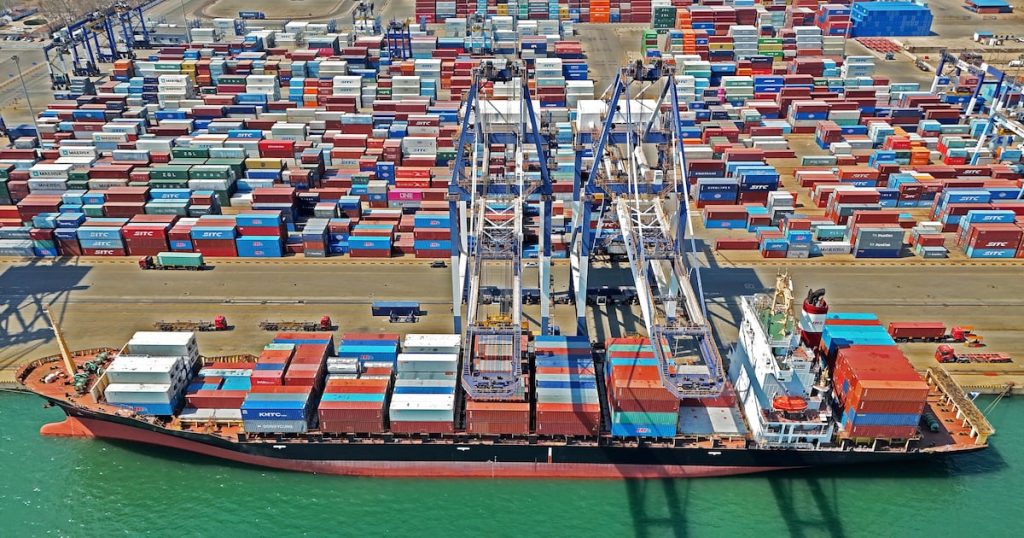
The container shipping sector is projected to be impacted the most significantly, as most goods shipped in containers will face tariff hikes. According to Bimco, the global shipping sector could see a 0.5 percentage point reduction in container volume growth if tariffs induce zero growth in US container imports. Maritime data firm Veson Nautical emphasizes that the uncertainty surrounding these tariffs makes it difficult for shippers to make crucial supply chain decisions.
Moreover, the World Trade Organization has warned that these tariff actions could lead to a contraction in global merchandise trade volumes by around 1% by 2025. This decline contrasts sharply with earlier projections and signifies mounting concerns regarding economic stability. Experts like Ngozi Okonjo-Iweala from the WTO express apprehension about the downward trend and the risks of retaliatory measures igniting broader trade hostilities.
In light of these developments, companies involved in global logistics, like DP World, highlight the necessity for adaptability as businesses adjust their supply chains in response to shifting trade policies. The growing complexities necessitate continuous flexibility and resilience from cargo owners, who must navigate these evolving challenges while aiming to maintain operational continuity and efficiency.
In summary, the global shipping industry is at a crossroads due to new US tariffs, raising significant challenges surrounding trade flows, demand, and pricing. This situation echoes broader economic anxieties, necessitating swift adaptability from shipping companies and traders to mitigate the adverse effects of these evolving tariff regimes.
Source link