Russian President Vladimir Putin’s visit to India on December 4-5, 2025, marked the 23rd India-Russia Annual Summit, a critical juncture in their historical relationship amid evolving global dynamics. This summit emphasized the Special and Privileged Strategic Partnership established in 2000, reflecting a commitment to enhance cooperation in defense, energy, and trade domains.
Significance of the Visit
- Timely Engagement: This first visit since 2021 highlighted a revival in bilateral relations against a backdrop of sanctions on Russia, pressures on Indian trade from the U.S., and volatility in global energy markets.
- Historical Context: The partnership is anchored in significant historical agreements, including the 1971 Treaty of Peace, which played a pivotal role in past conflicts such as the Bangladesh Liberation War. Since then, India and Russia have cultivated a multi-dimensional relationship spanning defense, energy, and technology.
Key Outcomes of the Summit
- Political and Diplomatic Engagement:
- High-level exchanges were reaffirmed, with discussions on enhancing cooperation in organizations such as the UN, SCO, and BRICS.
- Opening of new Indian consulates in Yekaterinburg and Kazan demonstrated a commitment to deepening ties.
- Economic Partnership:
- A revised trade target was set at USD 100 billion by 2030, accompanied by the adoption of “Programme 2030” for economic cooperation.
- Efforts included advancing the India–EAEU Free Trade Agreement and addressing trade barriers.
- Energy Collaboration:
- Energy cooperation emerged as a cornerstone, with discussions surrounding oil, gas, and nuclear energy projects.
- Russia’s role as India’s largest crude oil supplier following the Ukraine conflict underscored the importance of routing energy supplies through stable channels.
- Defence and Military Cooperation:
- The shift from a buyer-seller relationship to co-development and joint production of defense systems was emphasized.
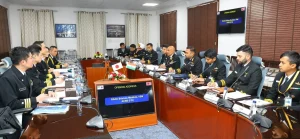
- The expansion of joint exercises and military delegations reflected a commitment to enhanced collaboration.
- Connectivity Initiatives:
- Strategic corridors such as the International North–South Transport Corridor (INSTC) and the Chennai–Vladivostok Maritime Corridor were prioritized, aiming to improve logistical efficiency.
Challenges Ahead
Despite the optimistic outcomes, several challenges remain:
- Trade Imbalance: The trade flow heavily favors Russia, raising concerns about India’s long-term negotiation power.
- Payment and Sanction Complications: Western sanctions create financial uncertainties and complicate payment mechanisms, hindering trade stability.
- Dependency on Russian Defense: India’s heavy reliance on Russian military equipment could lead to operational vulnerabilities due to supply delays.
- Geopolitical Dynamics: Russia’s growing proximity to China and India’s increasing ties with the U.S. pose potential challenges to diplomatic balance.
Future Directions
To navigate these challenges, India and Russia must:
- Rebuild trust through open communication, especially regarding defense matters related to China.
- Diversify trade beyond defense and energy to foster a more stable economic relationship.
- Secure long-term energy contracts to ensure price stability and steady supply.
- Fast-track connectivity projects to reduce logistical costs and enhance market access.
In conclusion, Putin’s visit and the ensuing summit underscore the resilience and adaptability of India-Russia relations, aiming for continued collaboration in an increasingly complex geopolitical landscape.