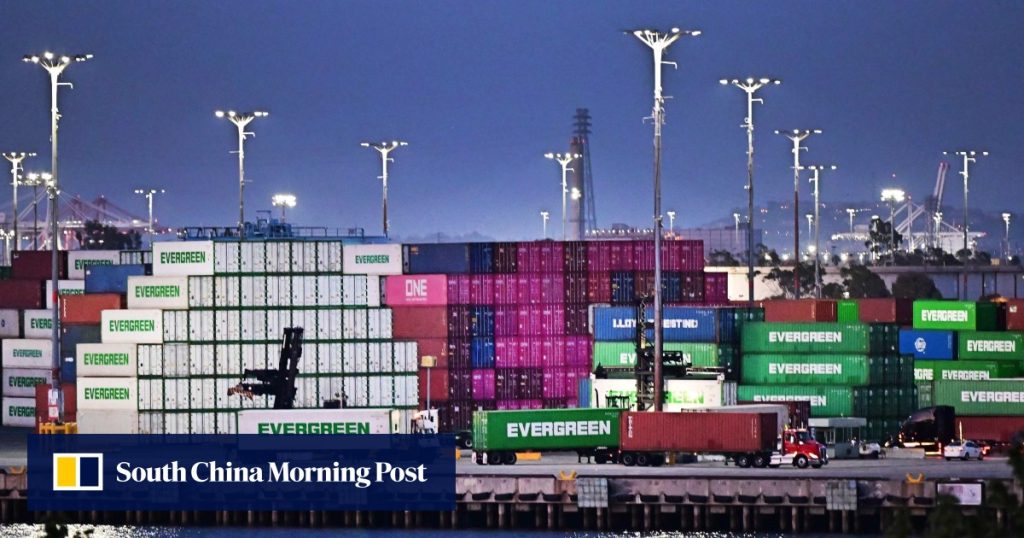
In early April 2024, just weeks after Donald Trump celebrated “Liberation Day,” the ramifications of his unpredictable tariff policies became starkly evident at America’s major maritime gateways. The ports, especially the combined operations of Los Angeles and Long Beach, have transformed into a critical focal point for the repercussions of these changes. These ports, responsible for handling about one-third of all containerized cargo entering the United States, could significantly impact global trade patterns.
Gene Seroka, director of the Port of Los Angeles, expressed concerns regarding the volatility of operations and its potential aftermath, stating, “Buckle up, this is going to get really bumpy for us.” With nearly 45% of the port’s volume coming from Chinese goods, any disruption could set off a chain reaction impacting other ports and trade networks that have taken decades to build.
Since Trump’s election in November, there has been a notable increase in activity at the Port of Los Angeles, as US importers anticipate and stockpile goods amidst the tariff uncertainties. The port reported a significant achievement in its operational history, moving over 10 million containers in 2024, and handling more than 300,000 container units in March alone, reflecting a 1.6% increase from the previous year. From January to March, China recorded a surplus of $76.6 billion in goods with the US, indicating a tense economic relationship exacerbated by tariffs.
The supply chain is now characterized by uncertainty, with experts predicting uneven port utilization, rerouting, and slowed trade could become the norm. The immediate and long-term implications of these tariff policies emphasize the need for businesses in logistics and trade to adapt to a rapidly evolving landscape. The cumulative effects of these operational disruptions may not only lead to inefficiencies at the ports but may also contribute to job losses and hinder economic growth. As the situation develops, stakeholders are preparing for potential challenges as trade dynamics continue to shift.
Source link