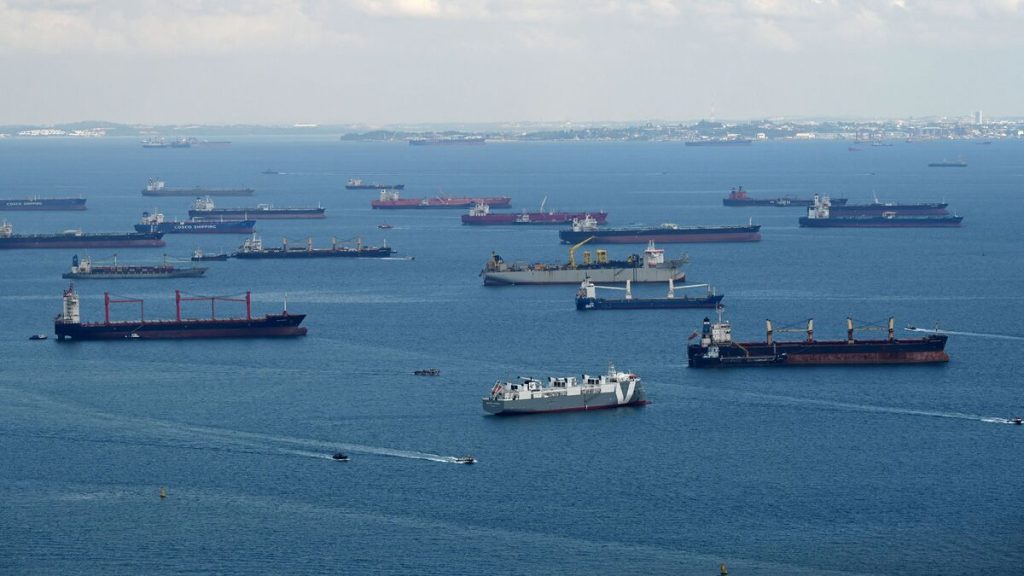
Thailand is promoting a transformative multibillion-dollar project aimed at reducing shipping times and costs between the Indian and Pacific oceans by circumventing the Malacca Strait, which is one of the world’s busiest maritime routes. Prime Minister Srettha Thavisin emphasized to investors in San Francisco that the proposed Landbridge project could lead to an average travel time reduction of four days and a 15% decrease in shipping expenses. With predictions indicating that traffic will exceed the Malacca Strait’s capacity by 2030, this project is positioned as a vital infrastructure initiative to ensure the continuous flow of goods.
The project is estimated to cost approximately 1 trillion baht (around RM132.32 billion) and will involve the construction of seaports on both sides of Thailand’s southern peninsula, interconnected by highway and rail networks. This 100-kilometer land connection is intended to replace a long-debated plan for a canal through the Kra Isthmus. The Malacca Strait, a crucial maritime corridor linking the Asia-Pacific with India and the Middle East, currently handles about 25% of the world’s trade but faces challenges, including a high frequency of maritime accidents—averaging over 60 annually.
The Landbridge is positioned as a solution to mitigate the issues associated with the Malacca Strait, enhancing safety and efficiency in maritime transport. The planned port on the west side is expected to handle 19.4 million twenty-foot equivalent units (TEUs), while the eastern port is projected to manage 13.8 million TEUs, collectively representing around 23% of the Port of Malacca’s total capacity.
Srettha highlighted the significant economic benefits of the project, forecasting that it could generate around 280,000 jobs and boost Thailand’s economic growth to 5.5% upon completion. Currently, Thailand’s economy is projected to grow modestly at 2.5% to 3% in 2023, following a growth rate of 2.6% the previous year.
The Thai government aims to have the Landbridge operational by 2030, allowing foreign investors to hold more than 50% stakes in partnerships with local firms involved in the construction of ports and related infrastructure. The projected costs for the deep-sea ports in Ranong and Chumphon could reach 630 billion baht, as noted by the Office of Transport and Traffic Policy and Planning.
During recent efforts to attract investment, Thai officials presented the project to potential U.S. investors at the Asia-Pacific Economic Cooperation summit, attracting interest from notable firms such as SSA Marine Inc and Oracle Corp. The Landbridge is seen as a unique opportunity for investment, bridging significant economic and strategic interests between the Pacific and Indian oceans and enhancing connectivity between East and West.
This initiative marks a pivotal shift from prior proposals, which aimed at creating a canal through Thailand’s narrowest point, a plan that faced repeated rejection due to environmental concerns.