Optimising Empty Container Flows: A Strategic Necessity for Global Trade Resilience
Empty container repositioning (ECR) is costly but necessary. Global trade is asymmetrical: high-export regions like Asia face container shortages, while high-import regions like Europe and North America must deal with surpluses and subsequent port congestion and storage issues.
Undersupply isn’t a problem unique to Asia, but it is where the issue is most visible. And it’s only getting more acute. As of late-2025, 41% of global container movements were empty repositioning legs, up from 31% in 2019, representing a $20 billion operational drain on the shipping industry.
But by understanding the current state of the ECR problem, we can begin to develop solutions.
Measuring the operational strain: fuel, fees and the cost of idle steel
The financial burden of ECR largely falls on carriers. Empty containers don’t generate revenue, but they do incur significant costs in terms of fuel, storage, and port handling fees. Carriers ultimately have to pass these costs onto their customers through higher shipping rates. BCOs and freight forwarders, meanwhile, face tighter equipment supply and reliability issues.
Empty containers occupy valuable space that would otherwise be dedicated to revenue-generating cargo, both on vessels and within port terminals. Empties affect efficiency too, as they slow the throughput of cargo.
Deadheading empty steel across vast oceans also brings with it a significant carbon footprint. The shipping industry is working hard to decarbonize, but ever-increasing ECR is making it far more difficult to meet targets.
Case study: ECR issues at the world’s busiest port
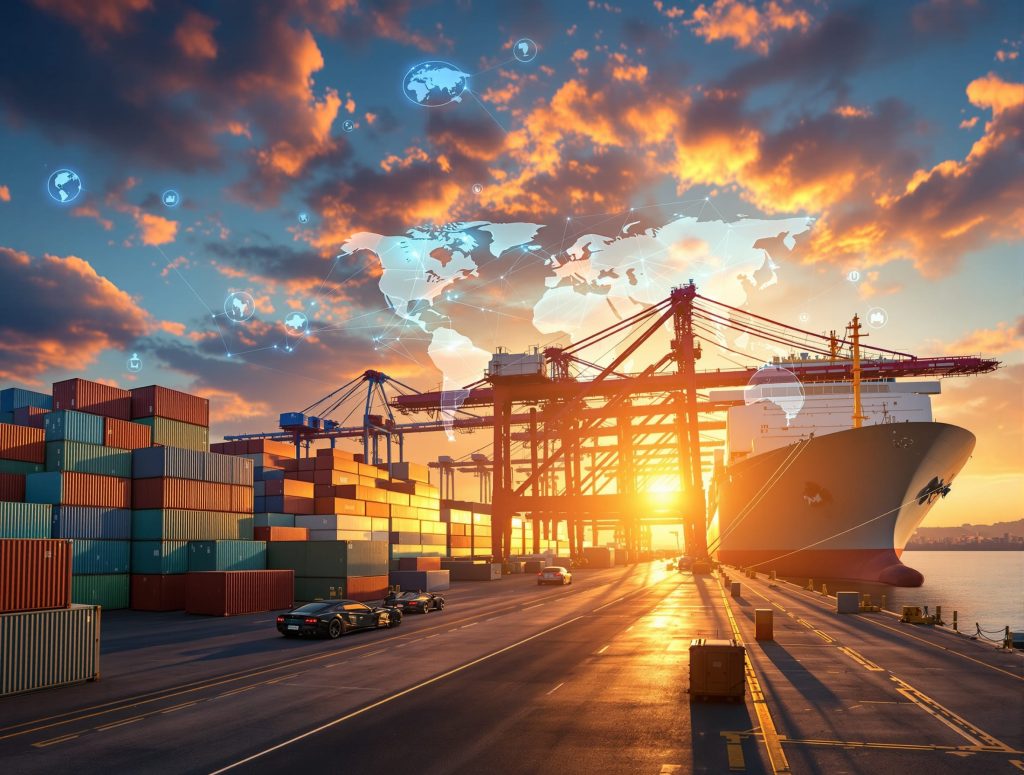
With a container throughput of 55.06 million TEU in 2025, Shanghai has retained its title as the world’s busiest port for the 16th consecutive year. But with exports far exceeding imports, the hub faces significant container supply challenges. Three out of every four containers that arrive at the port are empties repositioned from surplus regions like North America and Europe.
Seasonal fluctuations, headlined by the Lunar New Year, exacerbate Shanghai’s ECR challenges. In the weeks preceding the holiday, a massive surge in export demand exhausts local empty container stocks, leading carriers to deploy costly ‘sweeper’ vessels to bring more in. But then the trucking workforce goes home for the holiday, halting the drayage and stripping of import containers, effectively freezing potential empty assets in congested terminal yards for two weeks. When factory production eventually restarts, the industry typically faces a secondary equipment drought caused by post-holiday blank sailings that interrupt the scheduled return of empty boxes from surplus markets.
Mitigating ECR: a strategic reframing of equipment redistribution
The mitigation of Shanghai’s ECR challenges relies heavily on the integration of feeder networks and transshipment hubs. These act as the circulatory system of regional trade, aggregating empty containers from lower-volume peripheral ports and funneling them toward major gateways like Shanghai, reducing the time containers spend idle in regional yards.
If the cost of ECR is particularly high, or if empty containers simply aren’t available, leasing or purchasing new units becomes necessary.
But repositioning and purchasing aren’t the only potential solutions. Other ways to minimize the ECR problem, or at the very least reduce the issues it causes, include:
- Predictive analytics: AI-driven analytics help carriers to forecast regional container demand with greater accuracy, allowing them to move assets before shortages occur.
- Carrier-neutral pools: Establishing carrier-neutral ‘gray pools’ reduces empty miles by allowing different shipping lines to share a standardized fleet of containers.
- IoT Integration: Smart containers are fitted with IoT-enabled sensors to provide real-time visibility of idle assets – data that enables better management and movement of equipment in congested yards.
- Foldable technology: Foldable/collapsible container designs significantly improve slot efficiency, with four empty units occupying the same space as a single standard box.
- Inland depots: Actively expanding inland container depot networks alleviates pressure on berth-side storage and allows for the more efficient redistribution of equipment closer to manufacturing hubs.
- Street turns: Digital platforms can match exporters needing containers with importers holding empties to facilitate ‘street turns’ that bypass the port entirely.
The secondary container market represents another relief valve. In regions like Australia where trade imbalances lead to a surplus of idle equipment, some carriers opt to sell older units into the domestic market, where they’re repurposed as storage or living and working spaces, rather than pay for ECR.
Beyond the berth: the role of governance and inland infrastructure in ECR efficiency
Carriers can’t be left to deal with the ECR issue alone. Port authorities play a pivotal role in maintaining supply chain velocity by implementing policies that incentivize the efficient movement of empty containers.
Many authorities offer financial rebates or priority berthing for dedicated sweeper vessels that focus exclusively on clearing backlogged empties from prime berth space. The expansion of inland container depots (ICDs) serves to decouple the container storage process from the port, alleviating congestion and ensuring valuable terminal real estate is reserved for laden cargo over the long-term storage of empty steel boxes.
From a regulatory standpoint, the management of detention and demurrage (D&D) fees has evolved from a simple revenue stream into a sophisticated tool for container circulation. Policymakers are increasingly tweaking these charges to ensure they effectively encourage shippers and drayage providers to return empty containers into the flow as quickly as possible.
In high-volume Asian hubs, transparent D&D frameworks are essential to prevent stagnant containers from blocking terminal throughput. When applied strategically and consistently, these regulatory levers ensure empties remain in motion, reducing the overall cost of global trade and improving the resilience of the broader maritime network.
Future outlook: establishing ECR efficiency as a core pillar of maritime stability
The efficiency of ECR serves as a barometer for the health of the global supply chain. When empty assets accumulate in import-heavy regions while export gateways face equipment droughts, it signals a systemic friction that drives up costs and delays delivery schedules. With instances of ECR only becoming more pronounced, addressing this issue is no longer optional – it’s a prerequisite for maintaining the fluidity of international trade in an increasingly volatile economic climate.
Achieving a truly synchronized supply chain requires deep cross-sector collaboration between carriers, shippers, and technology providers to bridge the visibility gaps that currently hinder equipment flow. Lasting solutions must combine data-driven forecasting, shared infrastructure, strategic regulation, and sustainable repositioning strategies.
Ultimately, efficient ECR has evolved far beyond a mere logistics task. If the issue is approached in the right way, the maritime industry can transition from reactive management to proactive optimization, and the future of global trade can be secured.