The President of India has recently sanctioned the Indian Ports Act, 2025, which replaces the century-old Indian Ports Act of 1908. This new legislation aims to modernize port governance, promote integrated development, enhance ease of doing business, and optimize the utilization of the country’s vast coastline.
Key Features of the Act:
-
Maritime State Development Council (MSDC): The Act establishes the MSDC, which advises on the legal framework, growth, competition, and efficiency of the port sector. It is chaired by the Union Minister of Ports, Shipping, and Waterways and includes ministers from coastal states, Indian Navy and Coast Guard officials, and the Secretary of the Ministry for Ports.
-
State Maritime Boards (SMB): Recognizing the role of states, the SMB administers non-major ports; each state is required to form a Dispute Resolution Committee to handle port-related disputes, excluding major ports from civil court jurisdiction.
-
International Conventions: The Act mandates adherence to international standards, specifically the MARPOL and Ballast Water Management conventions, which focus on preventing marine pollution and managing ships’ ballast water. India is a signatory to MARPOL but not to the BWM convention.
-
Port Tariffs and Charges: Tariffs for major ports are determined by their governing bodies. In contrast, SMBs or concessionaires decide fees for non-major ports.
-
Port Officer Authority: Each port has a conservator appointed by the state government with power over vessel operations, ensuring streamlined maritime activities.
-
Mega Ports Classification: The Central Government, with state consultation, can designate ports as “mega ports,” allowing them to retain their existing status while adhering to respective regulations.
-
Emergency Preparedness: The Act requires a robust emergency response plan for safety and pollution incidents, subject to government audit.
-
Penalties and Compliance: Some offenses under the 1908 Act have been decriminalized and now incur monetary penalties rather than criminal charges. The Act also introduces digital integration for port data management and requires prior government clearance for significant ownership changes at ports.
-
Exclusions: Certain ports, navigable rivers, and military and foreign vessels are exempt from the Act’s provisions.
Conclusion:
The Indian Ports Act, 2025, is a significant step towards modernizing marine governance in India and aligning it with international maritime practices. However, it raises concerns regarding the classification of mega ports and the absence of an appeal process against penalties from the conservator. If effectively implemented with proper oversight, the Act aims to facilitate India’s ambition of becoming a leading maritime nation by 2047.
Current State of Indian Ports:
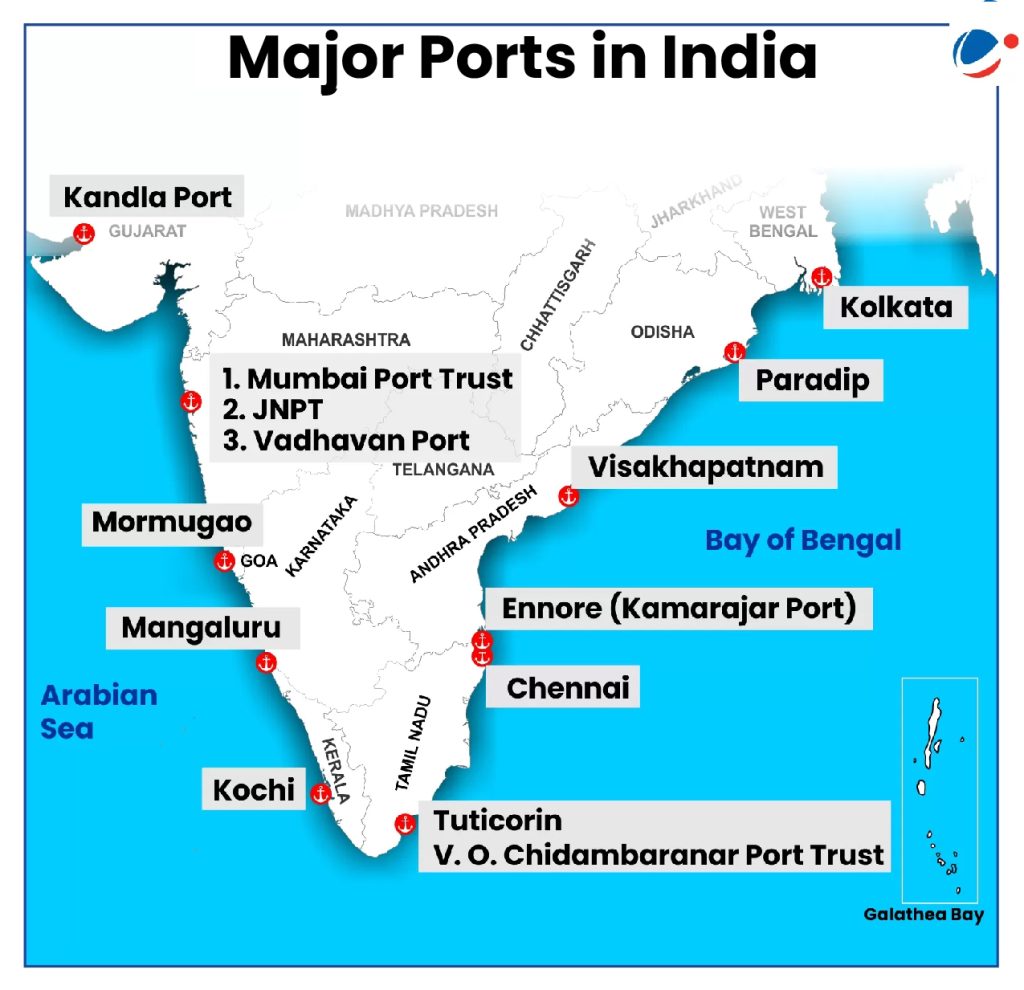
India currently operates 12 major ports (with a 13th under construction) and about 200 non-major ports, essential for maritime trade that constitutes 95% of trading volume and 70% by value. Over the last decade, efficiency metrics such as output per ship berth day and turnaround times have significantly improved, demonstrating the effectiveness of initiatives like the Sagarmala project and the Maritime India Vision 2030.
In summary, the Indian Ports Act, 2025, is a transformative reform for India’s maritime sector, aimed at enhancing efficiency and competitiveness in port operations while supporting the broader economic ambitions of the nation.