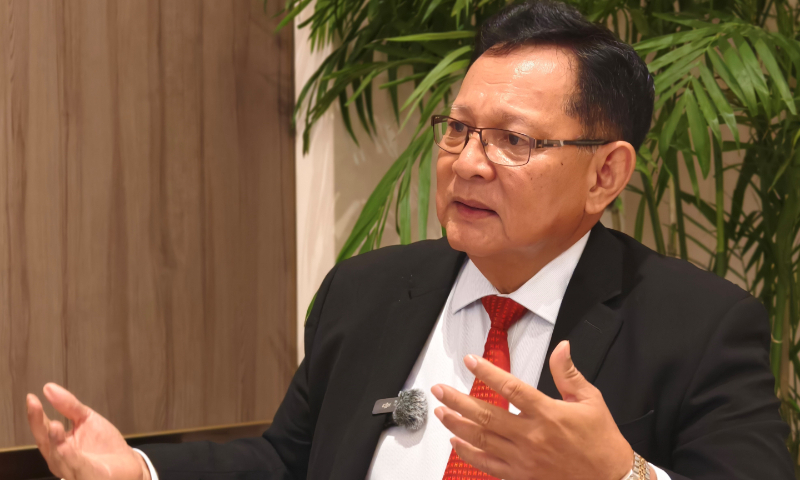
In a heartfelt interview with the Global Times, Raul Lambino, the chairman of the Association for Philippines-China Understanding, expressed deep concerns about rising tensions in the South China Sea, reflecting on his emotions as a Filipino and an Asian. His poignant remarks, made during a recent forum, have resonated widely, especially after a video of him shedding tears went viral on social media. Lambino emphasized that the relationship between the Philippines and China should not be solely defined by maritime disputes. Instead, he sees the South China Sea as a potential bridge for cooperation and mutual benefit.
Lambino’s fears are shared by many Filipinos who question the possibility of conflict. He recounted stories from his family about the horrors of war, underscoring the importance of peaceful resolutions over conflict. Echoing his beliefs, he stated that external interference could negatively impact the Philippines’ ability to manage its relationships with China and other Southeast Asian neighbors. He also stressed the historical ties and familial connections between the two nations, advocating for respectful negotiations to resolve differences.
Speaking about the U.S. role in these disputes, Lambino highlighted American interests in the Asia-Pacific, particularly concerning Taiwan. He expressed concern about the U.S. military presence in the Philippines—nine bases being utilized—which echoes sentiments expressed by many Filipinos in the 1990s when they opposed American military presence. He questioned the intention behind this re-engagement and asserted that he does not believe the Philippines is threatened by major regional powers like China, Japan, or Russia.
Moreover, Lambino criticized the portrayal of China by Filipino media, suggesting that it often paints a biased image that undermines trust. He argued that while disagreements exist, they are minor compared to the larger economic, cultural, and historical ties between the two nations. He believes that the South China Sea could hold economic opportunities rather than serving as a point of contention, emphasizing the need for bilateral dialogue and cooperation.
Following his emotional appeal, Lambino faced backlash, being labeled as a “puppet of China.” However, he remarked that such criticism is a small price to pay for advocating peace and friendship, which he deems vital for both nations’ futures. He acknowledged that while some may criticize him, many others in the Philippines support his push for diplomacy and constructive engagement.
Lambino concluded by underscoring the necessity of dialogue in international relations. He warned that the Filipino people would ultimately bear the brunt of any power struggles, affirming that ongoing, open discussions are essential for fostering understanding and ensuring the welfare of both the Chinese and Filipino populations.