Singapore, February 6, 2026 — Following the global success of its European and American editions,
CYSAT Asia concluded its first-ever regional event in Singapore yesterday. Co-organised by
SGInnovate and the European cybersecurity leader CYSEC, the event gathered 400 participants,
global experts, government officials, and industry pioneers from 25 European and Asian countries to
address the urgent need for resilient space infrastructure.
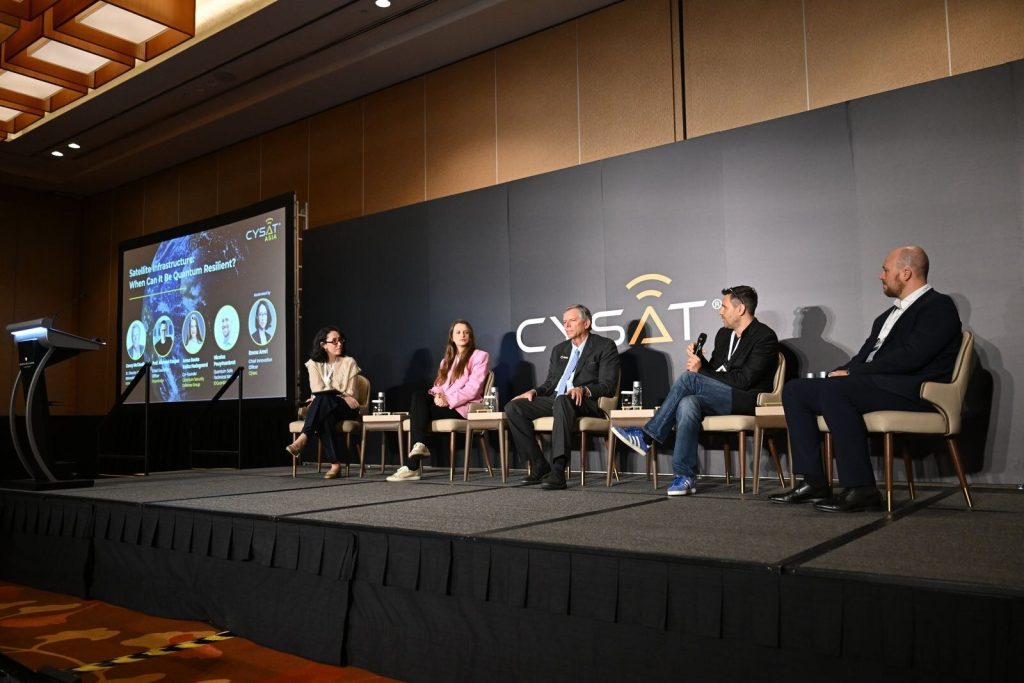
The event convened leading voices from across the space tech and cybersecurity sectors to discuss
the why’s and how’s of securing space assets, the impact of quantum computing on space
cybersecurity, and the need for collaborative partnerships and strong talent pipelines to support this
burgeoning industry.
From investors to global corporations, key speakers at the event included representatives from
Airbus, the European Commission, Fraunhofer, Institute of Electrical and Electronics
Engineering, IonQ, IQT, and Thales, alongside Singaporean Deep Tech startups SpeQtral and
MicroSec. Also present were industry stakeholders Infocomm Media Development Authority
(IMDA), CyberSG R&D Programme Office (CRPO), and CyberSG Talent, Innovation and Growth
(TIG) Collaboration Centre.
“Through CYSAT Asia, we’ve extended that mission to one of the most consequential intersections in
technology today: the confluence of space tech and cybersecurity”, said Dr. Lim Jui, CEO,
SGInnovate. “We’re confident that the insights and connections shared today will catalyse innovation
in this area, and lead to the development of more secure space infrastructure across the region.”
Exploring the landscape of space cyberthreats, and their impact on critical sectors
Speakers underscored how attacks on space systems now have immediate, real-world
consequences, from Global Navigation Satellite System (GNSS) spoofing disrupting thousands of
commercial flights annually to cyber vulnerabilities in legacy satellite architectures never designed for
today’s threat environment. The event affirmed that resilience must be designed end-to-end — across
satellites, ground stations, receivers, and the data flows that connect them.
Beyond defence and commercial uses, panellists also emphasised that cybersecurity is now
foundational to civil space services, where trust in data integrity and governance underpins safe use
for disaster response, climate monitoring, and national planning.
In his address, David Koh, Singapore’s Commissioner of Cybersecurity and Chief Executive of
the Cyber Security Agency of Singapore mentioned that there are rapid technological
advancements accelerating the growth of the space industry, and emphasised that cybersecurity must
now be “baked” into the design of these technologies to prevent disruptions with spillover effects
across borders. Meanwhile, Jonathan Hung, Executive Director of the Office for Space
Technology & Industry, Singapore (OSTIn), Singapore’s national space office, emphasised that
cyber resilience in space requires close coordination across government, industry, and the broader
ecosystem. Strong cyber resilience underpins trust in space-enabled services, and is strengthened
through robust multi-agency partnerships here in Singapore.
Highlighting opportunities for growth and collaboration
With the goal of raising awareness around space cybersecurity and laying important groundwork for
the establishment of cross-industry collaboration, CYSAT Asia highlighted the critical role of
public-private partnerships, international cooperation, and ecosystem-level investment.
Hsien-Hui Tong, Executive Director of Investments at SGInnovate noted that although both space
and cybersecurity are established sectors, their intersection remains under-invested, often failing
between traditional commercial and sovereign funding models. Progress will depend on coordinated
action – from governments acting as early anchor customers, to investors supporting
deployment-ready solutions, and ecosystems enabling companies to test, integrate, and scale across
borders.
Building a pipeline of space cybersecurity talent
The development of a long-term talent pipeline was also a key theme at the event. Experts likened a
robust talent ecosystem to an iceberg: while certifications represent the visible tip, critical thinking and
an adaptive mindset will be the critical factors underpinning success. They emphasised the need for a
“Swiss Army Knife” skillsets, with multi-disciplinary abilities bridging the gap between IT and
operational technology, and called for industry-vetted, hands-on training to prepare professionals for
high-stakes environments.
“Space systems today underpin critical national infrastructure, yet they remain a ‘ticking cyber bomb’ if
we do not act collectively.” quotes Patrick Trinkler, CEO of CYSEC. “CYSAT Asia 2026 has proven
that securing these assets requires a diverse mix of talent — from cryptographers to mission
operators — working outside of traditional silos to address the converging commercial, sovereign, and
military stakes of 2030. Our goal is to ensure that as the space environment becomes more
congested and contested, the integrity of our orbital data remains unassailable.”
To further bridge the gap between space tech and cybersecurity, CYSAT Asia hosted a series of
technical keynotes and hands-on workshops, equipping industry professionals with knowledge at the
intersection of space tech, cybersecurity, AI, and quantum computing. These workshops were part of
the CYSAT Academy programme, an initiative designed to provide training and certifications in
relevant, high-impact areas. At CYSAT Asia, the Academy ran two workshops:
1. “Cyber Threats Along the Lifecycle of a Satellite” by HelvetiSpace, which dove into the
threats faced by satellites at each stage of their lifecycle, typical challenges encountered
across space systems, and other foundational concepts.
2. “How to Hack a Satellite” by Thales, which educated participants on how to infiltrate
satellite infrastructure, expanding their knowledge of attack surfaces and methods while
exposing them to the impact of cyberattacks on satellites.
Looking ahead to CYSAT Asia 2027, SGInnovate and CYSEC will continue to engage local and
international ecosystems to bridge the gap between awareness and meaningful action, while building
and bringing the community together to achieve true resiliency for space cybersecurity.
Selected keynotes, technical sessions, and the event photo gallery are available for review. For more
information and to access on-demand highlights, please visit: www.cysat.eu.
About CYSEC
CYSEC is a European cybersecurity company based in Switzerland and France, with additional locations in Italy and Luxembourg. The company provides world-leading, high-performance cybersecurity tools to ensure robustness, confidentiality, and integrity for the space internet networks & critical infrastructures. Since 2021, CYSEC has also been the organiser of CYSAT, the leading event in space cybersecurity in Europe, bringing together key industry players each year to discuss security challenges and implement solutions.
About SGInnovate
SGInnovate is a Deep Tech ecosystem builder and investor, backed by the Singapore Government. Our expertise and approach combines investments, talent development and community-building to catalyse the translation of emerging technologies into tomorrow’s opportunities.
Through our flagship Deep Tech Central platform, we connect individuals, founders and companies to specialised resources and opportunities across all technological domains and stages of growth. Our portfolio of emerging tech startups comprises some of the most promising companies leading the commercialisation of research developed from Singapore’s RIE ecosystem. Connect with us at SGInnovate.com.