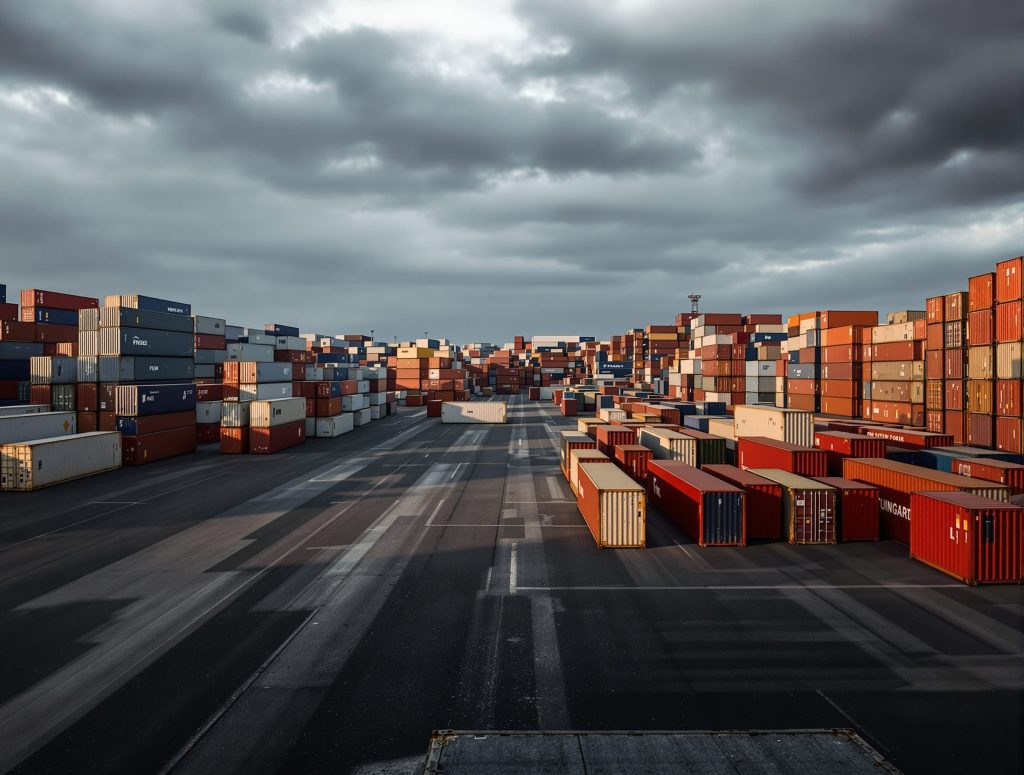
General purpose (dry freight) shipping containers are the lifeblood of the global economy, accounting for around 90% of the world’s container fleet.
The remaining 10% of containers are often labeled ‘specialized’: the open tops, reefers, tanks, and flat racks that are designed to handle whatever goods a general purpose dry van can’t.
This relative rarity results in logistical complexities, particularly for high throughput, export-driven ports, such as those in Asia, that demand a constant flow of specialized containers to dispatch often urgent or perishable goods.
By understanding the non-standard container deficits faced by key export regions, and the challenges that have led to these deficits, we can work on mitigation strategies that enhance the efficiency of global trade.
The growing criticality of non-standard assets
Globally, nine out of ten intermodal containers are classed as ‘general purpose’ (GP): simple metal boxes, usually 20ft or 40ft long, that provide protection to dry goods stored inside. The remaining 10% of the world’s fleet comprises specialized equipment designed for cargo that cannot fit or survive in a standard GP unit. These include:
- Refrigerated units (reefers): Insulated and climate controlled containers used for perishables, pharmaceuticals, and chemicals.
- Tank containers: Specialized vessels held within a standard ISO frame, designed for the bulk transport of liquids, gases, and powders.
- Open tops: Units featuring a removable tarp cover rather than a solid steel roof, allowing for the top-loading of tall cargo or heavy machinery.
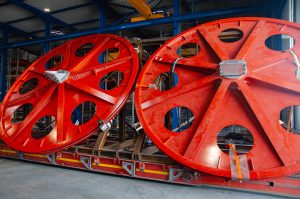
- Flat racks: Containers consisting of a reinforced floor and either fixed or collapsible end-walls, designed for out-of-gauge (OOG) cargo too wide or bulky for a GP unit.
While standard dry van fleets have reached record volumes in 2026, the supply of specialized units remains insufficient and inelastic.
As the world – and Asia in particular – increases the shipment of high-value, oversized, and perishable goods, the shortage of non-standard equipment is gradually transforming from a minor bottleneck to a major threat to global supply chain resilience.
Understanding the specialized equipment gap
To fix the problem, we first need to understand it. Examples of specialized container equipment shortages are plentiful, particularly in the high-export Asian market:
- Vietnamese food exporters are facing inconsistent container supply, forcing manufacturers and ports into the resource-intensive staging of perishable goods. Current 2-5 day delays are likely to stretch well into 2026.
- India is currently experiencing a surplus of standard 40-foot containers but a lack of specialized equipment like 20-foot open tops and flat racks – a key concern for its fast-growing heavy engineering sector that requires containers for OOG shipments.
- The use of flat rack containers in Southeast Asia is projected to grow at nearly twice the global average over the next six years, potentially making the current undersupply of specialized containers even more acute.
The drivers of this undersupply are generally positive: a sign of export growth in the Asian market, from heavy machinery in the subcontinent to agricultural exports in Southeast Asia.
The ‘China+1’ strategy is playing its part too, by adding an extra leg to the manufacturing supply chain, and driving up demand for specialized containers within ‘+1’ countries like India, Vietnam, and Thailand.
Operational challenges in sourcing and management
The solution to the problem of specialized container undersupply isn’t as simple as build more, though that is undoubtedly a primary part of the equation. The ongoing management of non-standard containers – getting them where they need to be, keeping them cargo-worthy – will prove every bit as important to the ongoing efficiency and resilience of the global supply chain:
- Maintenance and expertise: Unlike dry vans, non-standard units often require technical upkeep (e.g. pre-trip inspections for reefers) and specialized handling equipment at terminals, both of which will need to be expanded with increasing throughput.
- Repositioning: The one-way nature of oversized or refrigerated cargo often leads to extreme imbalances and empty container repositioning (ECR) issues far beyond those of general purpose containers, leading to specialized empties often sitting idle in import-heavy regions.
- Out-of-gauge friction: Stowing OOG units on ultra-large container vessels (ULCVs) can be a logistical nightmare, which, if handled badly, can result in significant port inefficiencies and slot price increases.
Strategic sourcing: the rise of independent brokers
Armed with a better understanding of the problem, let’s turn to solutions.
Independent container suppliers are increasingly identifying the specialized shortfall issue, and are working to fill the gap.
A shift from carrier-owned equipment (COE) is gathering pace. Over 60% of containerized cargo is now handled through leased equipment, rather than units directly owned by shipping lines. This shifts the burden of specialized container supply to dedicated and potentially more effective operators.
These transactions are also increasingly being funneled through digital platforms that provide a real-time view of availability and rates. This allows the market to steer the movement and pricing of non-standard stock, hypothetically ensuring that the areas of greatest need are serviced first.
Technological solutions and future outlook
Beyond increasing supply, a number of other solutions might assist the global supply chain in addressing the current specialized container shortfall:
- Predictive sourcing: Using AI to forecast when and where specialized equipment will be needed.
- Modular adaptability: Introducing convertible containers that can be placed in multiple configurations, e.g. general purpose, flat rack, and open top.
- Smart tracking: Using IoT and telematics to monitor reefers and power predictive maintenance, minimizing container downtime.
What does the future look like? It’s largely in the industry’s hands. We understand the current specialized container shortfall and where it is trending, and we have a range of strategies to combat the issues and capitalize on the opportunities.
Equipment variety is essential, particularly within the large, multifaceted, and fast-growing Asian trade market. To meet the moment, we’ll need a diversified procurement strategy that encompasses carriers, brokers, and independent suppliers.
Building resilience through equipment diversity
In an increasingly complex and volatile trade environment, the ability to source not just a box, but the right box, will define the competitive edge of global logistics providers and entire trade regions.
By being proactive rather than reactive on specialized container challenges, we can build strength and resilience into the global supply chain.