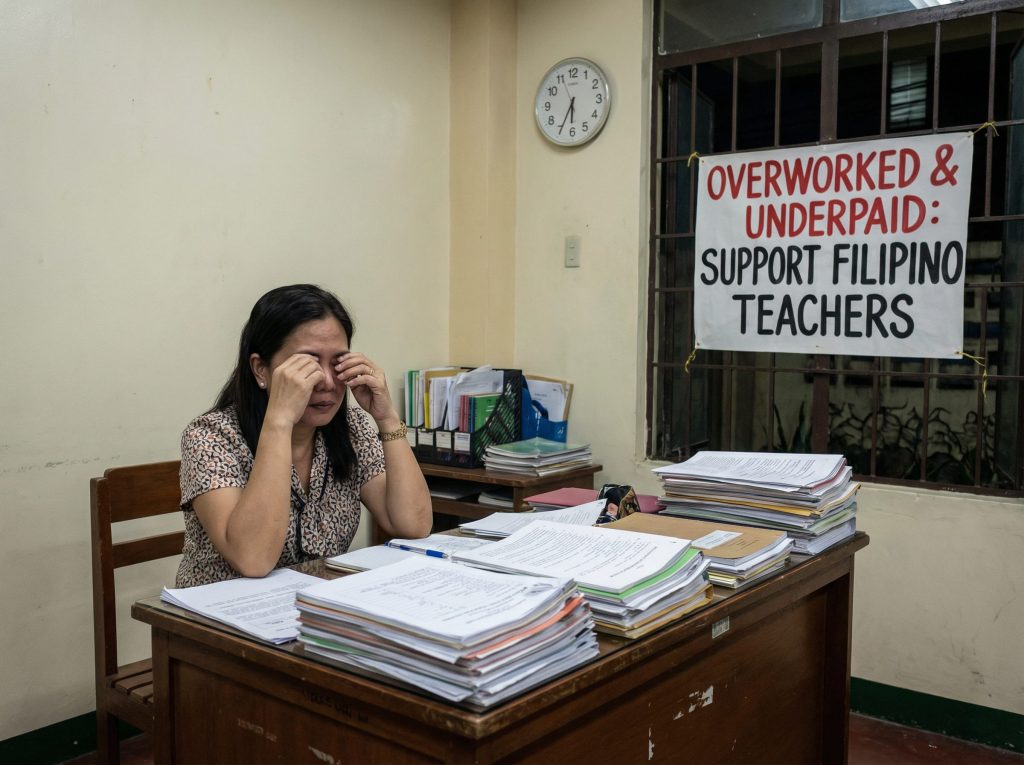
While the nation commemorates heroes who have served the country with valor, advocates are calling attention to a different kind of everyday heroism—that of Filipino teachers who continue to work under challenging conditions. Despite being the backbone of the nation’s education system, teachers remain overworked and underpaid, a situation that has prompted calls for urgent reform and better recognition of their contributions.
The Reality of Being Overworked
400 Unpaid Hours Annually
The extent of teachers’ workload has been quantified in stark terms. According to Cerebro data, teachers in the Philippines currently spend a minimum of 400 hours annually outside their paid working hours. This translates to approximately 50 full working days of unpaid labor each year—time spent on lesson planning, grading papers, preparing instructional materials, and fulfilling administrative requirements.
Beyond the Classroom
Research shows that teachers in Philippine public schools tend to work beyond official working hours, with their workload compromising both their personal and professional lives. The burden extends far beyond the standard six-hour teaching load, encompassing numerous non-teaching duties and administrative tasks that consume valuable time and energy.
Administrative Burden
Teacher workload has long been a pressing issue in the Philippines, with educators often stretched thin by excessive administrative responsibilities. These non-teaching duties include paperwork, reporting requirements, and various administrative tasks that detract from their primary mission of educating students.
The Underpaid Reality
Starting Salaries Fall Short
The compensation for Filipino teachers remains inadequate relative to their workload and responsibilities. The minimum salary for a new public school Teacher I position reaches ₱30,024 per month as of 2025 (Salary Grade 11) . However, this amount fails to match the actual needs of teachers and their families.
For context, the 2025 salary structure for teachers is as follows:
- Teacher I (SG11): ₱30,024
- Master Teacher IV (SG21): Higher grade but still considered insufficient
Driving Teachers Abroad
The combination of low salaries and heavy workloads has created a crisis in teacher retention. Some reasons why Filipino teachers are leaving for jobs abroad include:
- Extremely low salaries for public school teachers in the Philippines
- Heavy workloads that extend far beyond paid hours
- Better compensation packages overseas
- Improved work-life balance in other countries
Recognition on Araw ng Kagitingan
In an editorial marking Araw ng Kagitingan (Day of Valor), The Philippine Star highlighted teachers among the everyday heroes deserving of commendation. The editorial stated: “So do teachers, most of whom are overworked and underpaid, as well as the other people in government who give justice to the term public servants”.
This recognition places teachers alongside other frontline workers, including:
- Philippine Coast Guard and Navy personnel defending sovereignty
- Health professionals who served during the pandemic
- Dedicated government workers serving the public
The Quiet Crisis
A comprehensive study titled “Underpaid and Undervalued: The Quiet Crisis Among Teachers” examines the widespread but often unnoticed crisis facing Filipino teachers. The research highlights how educators are burdened with excessive workloads while receiving inadequate compensation for their critical role in shaping the nation’s future.
The crisis is described as “quiet” because it often goes unnoticed by the general public, despite its significant impact on:
- Teacher morale and retention
- Quality of education
- Student outcomes
- The sustainability of the education system
Government Response
New Overtime Compensation Policy
Recognizing the severity of the situation, the Department of Education (DepEd) has ordered a new policy to compensate teachers for overtime work beyond their regular six-hour teaching load. According to DepEd Order 2025, teachers who complete at least six hours of actual classroom teaching per day may be eligible for overtime compensation.
However, there are limitations:
- Teachers on travel status are not authorized to claim overtime pay
- Specific requirements must be met to qualify for compensation
Administrative Task Reduction
DepEd Order No. 2, s. 2024, aims to remove administrative tasks from teachers’ workload, allowing them to focus more on their primary teaching responsibilities. This initiative represents an attempt to alleviate teachers’ non-teaching duties and restore focus to actual instruction.
The Call for Reform
Workload Reform Needed
Advocates emphasize that Filipino teachers need comprehensive workload reform. The current system, which stretches educators thin with excessive responsibilities, is unsustainable and compromises the quality of education.
Key areas requiring reform include:
- Reduction of non-teaching duties: Limiting administrative tasks that take time away from instruction
- Realistic workload expectations: Aligning assigned duties with paid working hours
- Better support systems: Providing adequate resources and personnel to handle administrative functions
- Professional development time: Allocating paid time for lesson planning and skill enhancement
Salary Adjustments
Beyond workload reform, there is a pressing need for salary adjustments that reflect:
- The actual cost of living in the Philippines
- The professional qualifications required for teaching
- The critical importance of education to national development
- Competitive rates that prevent brain drain to other countries
Impact on Maritime Education
The teacher crisis extends to specialized fields, including maritime education—a sector crucial to the Philippines’ position as a leading supplier of seafarers worldwide. Maritime instructors and trainers face similar challenges:
- Heavy teaching loads combined with practical training requirements
- Administrative duties related to MARINA and CHED compliance
- Inadequate compensation compared to industry standards
- Competition from shipping companies offering better pay
When maritime educators leave for better opportunities abroad or in the private sector, it affects the quality of training for future seafarers and threatens the Philippines’ maritime industry leadership.
Conclusion
The recognition of teachers as everyday heroes on Araw ng Kagitingan serves as a reminder that valor comes in many forms. Filipino teachers demonstrate courage daily by continuing to educate the nation’s youth despite being overworked and underpaid. With 400 unpaid hours annually, starting salaries of around ₱30,000, and excessive administrative burdens, teachers face a quiet crisis that demands urgent attention.
While recent government initiatives like overtime compensation policies and administrative task reduction are steps in the right direction, comprehensive reform is needed. The nation must ensure that those who shape future generations receive fair compensation, manageable workloads, and the recognition they deserve—not just in words, but in concrete policies and adequate resources.
As the Philippines continues to produce world-class professionals, including maritime workers, the foundation of this success rests on the shoulders of teachers. Supporting them is not just an act of fairness—it’s an investment in the nation’s future.