
The Indonesian Maritime Security Agency, known as Bakamla, is grappling with significant challenges in executing its core responsibilities of maintaining security, safety, and law enforcement within Indonesia’s vast maritime jurisdiction. This nation, consisting of over 17,000 islands and a coastline of 108,000 kilometers, covers a sea area of approximately 6.9 million square kilometers, underscoring the necessity for strict maritime oversight. However, Bakamla faces limitations due to insufficient personnel, a diminished fleet, and inadequate funding.
Recent cuts to the national budget, totaling Rp 306 trillion (US$18.8 billion), introduced by President Prabowo Subianto to finance programs like free nutritious meals and establish the Investment Management Agency, have worsened Bakamla’s financial situation. Its budget for 2025 has been slashed from an initial allocation of Rp 1084 billion (US$66.5 million) to Rp 729 billion (US$44.7 million), reverting it closer to 2017 levels and significantly hampering operational capabilities.
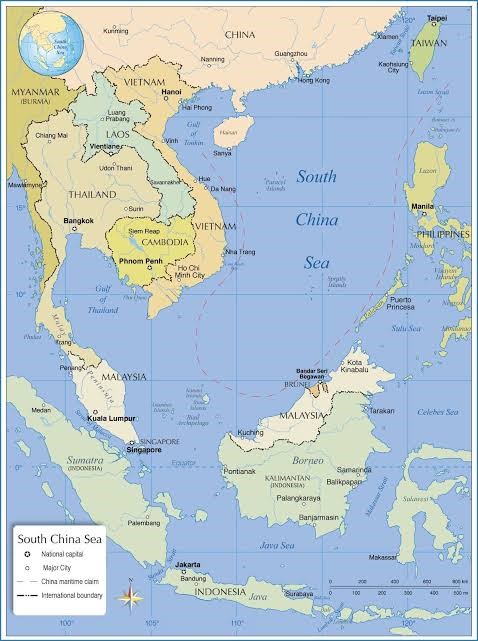
Bakamla’s operational challenges are compounded by geopolitical tensions, particularly in the South China Sea, where Chinese vessels have increasingly entered Indonesian territorial waters, especially in the North Natuna Sea. Established in 2014, Bakamla was created to replace the Maritime Security Coordinating Agency, yet it has struggled with funding shortages and an overlapping mandate shared with 12 other agencies. This proliferation of authorities has led to inefficiencies and confusion in maritime law enforcement, as ships crossing Indonesian waters often face multiple inspections from different bodies.
Despite these hurdles, Bakamla is essential for asserting Indonesia’s maritime sovereignty and responding to legal violations and maritime accidents. Its current fleet lacks the necessary capacity to effectively safeguard this extensive maritime domain. While Japan has pledged assistance in the form of three patrol ships, this Limited support does not significantly address the broader needs for fleet expansion.
From 2017 to 2022, Bakamla has experienced continual budget cuts, which appears contradictory to President Prabowo’s electoral promises to reinforce maritime sovereignty ahead of the 2024 elections. Financial constraints hinder Bakamla’s operations, necessitating strategic reevaluations to maximize remaining resources. Prioritizing capital expenditures over personnel and general goods could enhance Bakamla’s operational effectiveness.
Furthermore, improving interagency coordination and communication among the 12 other maritime agencies could minimize jurisdictional overlap and enhance overall efficiency in law enforcement. Strengthening diplomatic ties with other nations for joint patrols and vessel contributions is another avenue to alleviate Indonesia’s fleet shortages, potentially exploring alternative funding sources through partnerships with nations committed to Indo-Pacific security, such as Canada.
In the long term, advancing a maritime security bill to solidify Bakamla’s legal framework is crucial for clarifying its responsibilities and reducing jurisdictional conflicts. This legislation has gained recent attention, with commitments from government officials to prioritize its discussion and implementation in the coming years.
Addressing Bakamla’s budget reductions is imperative as failure to do so may endanger its ability to perform essential duties within Indonesia’s extensive maritime landscape. Maintaining maritime security is critical not just for Indonesia, but also for regional stability in the face of ongoing geopolitical tensions.
Source link