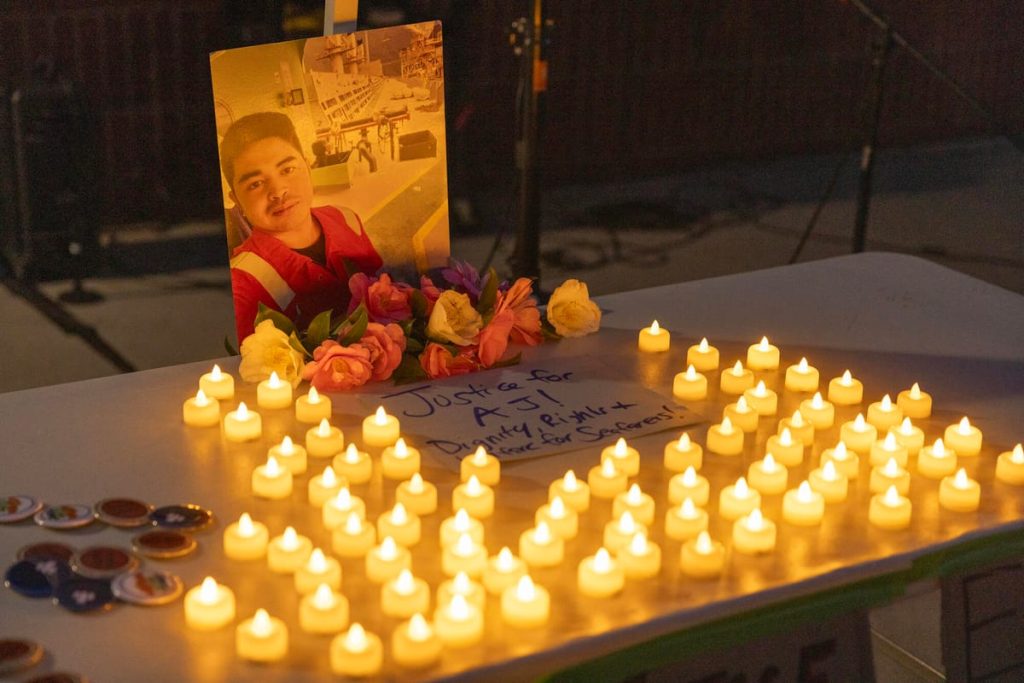
A recent vigil was held at the University of Portland to honor AJ Kent N. Meraña, a Filipino seafarer who would have turned 30 but tragically died under controversial circumstances. Meraña’s body was discovered over six months ago in the Columbia River, following an incident aboard the bulk cargo ship MV Fermita, where he was reported to have gone overboard while the crew was swimming. The Cowlitz County Sheriff’s Office ruled his death as an accidental drowning, suggesting Meraña had jumped from a height and failed to resurface. However, local advocacy groups criticized the investigation as insufficient, claiming it lacked thorough interviews with crew members and failed to address critical safety concerns.
Meraña had emigrated from the Philippines, part of a community of around 10 million Filipinos who seek better employment opportunities abroad. His involvement with an offshore Norwegian company placed him under a complex set of safety regulations that often leaves foreign seafarers without clear accountability for their welfare. Many mourners, including representatives from various Filipino and maritime advocacy groups, raised concerns about the circumstances leading up to his death, questioning who might be accountable and expressing outrage that the crew was permitted to swim in such treacherous waters.
The Coalition of Filipino and maritime advocates have lobbied for more transparency and investigations into maritime safety practices, noting the apparent risks associated with crew swimming in active shipping lanes, especially in a congested area like the Columbia River. Emma Martinez, a member of the Pacific Coast Coalition of Seafarers, articulated frustration over the investigation’s lack of depth, emphasizing that Meraña’s death was preventable given the obvious dangers.
Family members of Meraña, including his father who attended the vigil via video, have also expressed concerns about how assistance was provided following his death, with difficulties in accessing death benefits. Meraña’s father has similarly questioned the ship’s captain’s decision to allow swimming, reflecting the broader concern regarding seafarers’ safety.
Ryan Brazeau from the International Transport Workers’ Federation echoed these safety concerns, underscoring that swimming is typically discouraged for seafarers, especially in operational waters. The incident has brought attention to the regulatory inconsistencies surrounding labor protections and safety enforcement for international crews. This incident is part of a larger narrative about the vulnerabilities faced by Filipino seafarers and the need for improved oversight and accountability from maritime authorities and employers, illustrating the urgent need for systemic reform in the maritime labor sector.
Efforts to engage the Philippine government have been ongoing, demanding their involvement in the investigation similar to their commitment to look into other cases of missing seafarers. Advocates emphasize that the responsibility for seafarers’ welfare must be upheld adequately across jurisdictions, calling for justice not only for Meraña but for the broader community of maritime workers.
Source link