
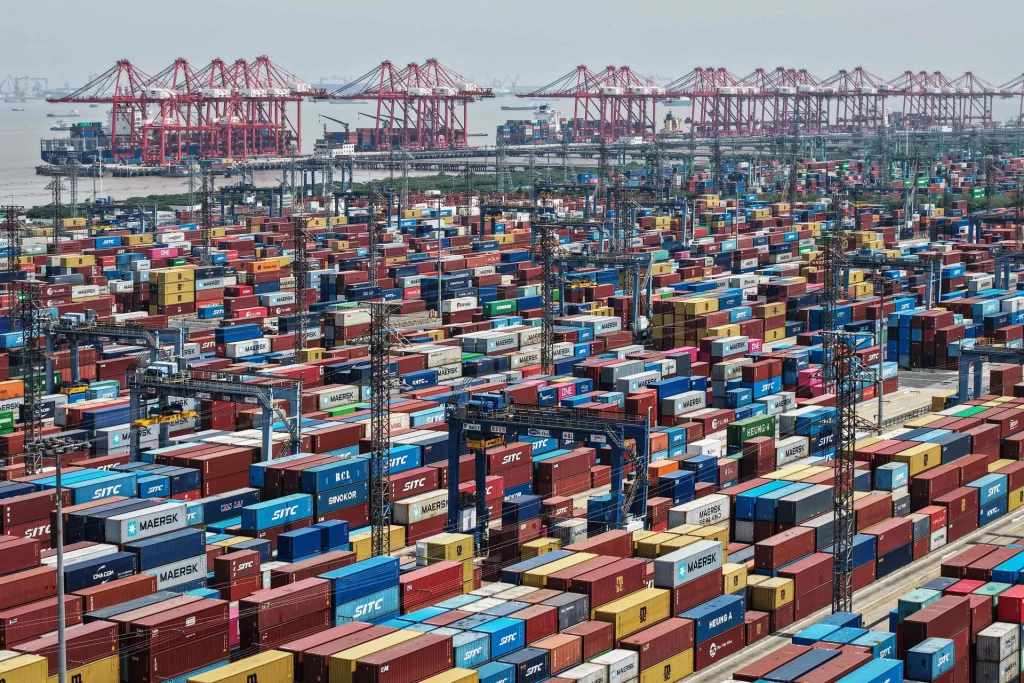
The global shipping industry is currently facing significant challenges due to new port fees imposed by the U.S. on Chinese-built and operated ships. Announced recently, these fees will take effect mid-October and add to an already complex landscape characterized by fluctuating tariffs and shifting trade dynamics, particularly exacerbated by the recent return of Donald Trump to the White House and his tariff strategy.
Industry experts have observed unprecedented volatility, resulting in shipping companies needing to adapt continuously to changing tariffs. For example, in the weeks leading up to Trump’s announcement of a 90-day pause on some tariffs—excluding those targeting China—there was a notable slowdown in trade. Ships were often sailing half-empty, particularly on transpacific and transatlantic routes, with many companies opting to hold on to their stock as a precaution. This dynamic led to a drop in sea freight rates, but as the market adjusted and firms sought to ship more goods to the U.S., rates began to climb once again.
The situation has been compounded by the impressive tariffs already introduced by the Trump administration, some reaching as high as 145% on various Chinese imports, culminating in tax rates as high as 245% on certain products. Given that China produces nearly half of all newly launched ships, these tariffs are expected to significantly impact shipping routes and freight rate structures.
Experts project a long-term decline in freight rates similar to what occurred during Trump’s first term when the industry faced oversupply, decreasing rates, and rising operational costs. As a result, certain shipping routes may become less viable, potentially steering traffic toward Southeast Asia or India. Analysts from the British freight forwarder Zencargo point out that the traditional China-U.S. route could become unprofitable, prompting shipowners to reconfigure their operations and explore emerging markets in regions like Latin America.
However, major shipping lines such as MSC, CMA CGM, and Maersk have yet to implement significant route changes despite noticing increased demand in Southeast Asia alongside a decline in shipments from China. Similarly, the German firm Hapag-Lloyd reported ongoing stability in Atlantic routes but a substantial drop in demand from China.
The Boston Consulting Group has indicated that a sharp decline in U.S.-China trade is imminent. They foresee a potential plunge of up to 81% in merchandise trade between the two countries, contributing to the World Trade Organization’s forecast of a global goods trade decline by 1.5% in 2025, depending on tariffs.
Overall, the shipping industry is no stranger to disruptions, with logistical chains previously affected by events like the COVID-19 pandemic. According to McKinsey, disruptions occur on average every 3.7 years. While shipping companies have grown more adept at adjusting routes, the process of shifting operations toward new markets will require time and strategic planning, as noted by industry specialists.
Source link