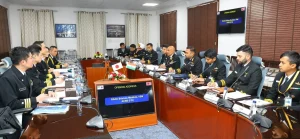
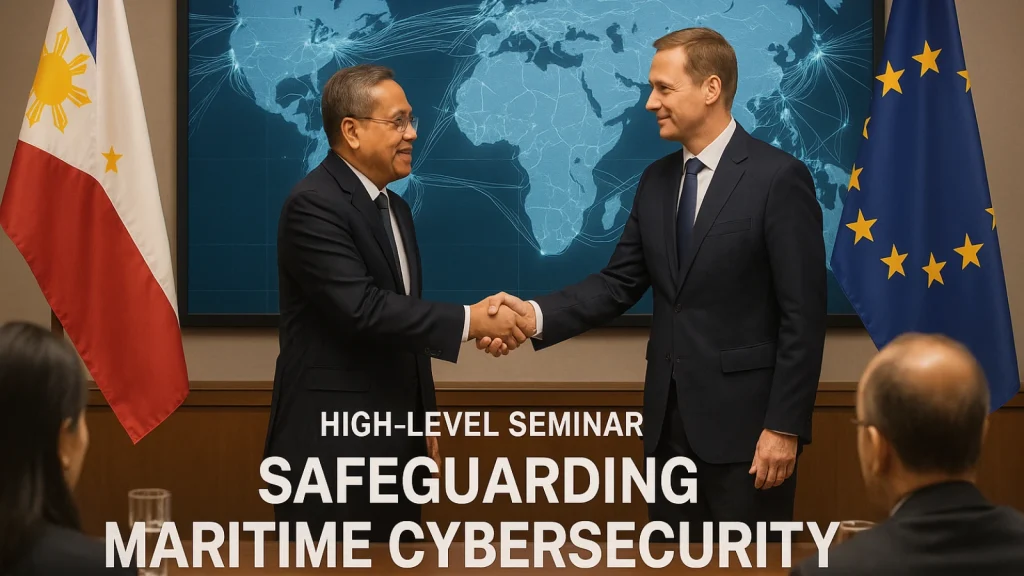
Experts from the Philippines and the European Union (EU) convened on Thursday in Manila for a high-level seminar aimed at addressing the increasing threats to vital infrastructure, which includes sea cables and cyber networks essential for global communication and economic stability. This seminar marked the first collaboration after the launch of the Philippines-EU Security and Defense Dialogue, illustrating a commitment to bolster security cooperation.
Hosted by the Philippine Department of Foreign Affairs (DFA) and supported by the EU’s Enhancing Security Cooperation in and with Asia and the Indo-Pacific (ESIWA+) initiative, the seminar focused on the rising risks associated with hybrid threats. These threats combine cyberattacks, misinformation campaigns, and physical sabotage aimed at critical services. The discussions aimed at developing strategies for better protection of these systems and enhancing cooperative responses to threats.
DFA Assistant Secretary for European Affairs, Deena Joy Amatong, highlighted the shared responsibility among local, national, and international entities in safeguarding critical infrastructure. She emphasized the need for coordinated efforts to ensure the safety, stability, and resilience of societies, not just for the present but also for future generations.
EU Ambassador to the Philippines, Massimo Santoro, assured Filipino partners of the EU’s readiness to share expertise and resources. He pointed to various EU frameworks designed for critical infrastructure protection, including the Directive on the Resilience of Critical Entities and the EU Action Plan on the Security of Submarine Cables. These initiatives offer valuable reference points for both nations to develop joint strategies aimed at enhancing the resilience of crucial infrastructures and enabling effective incident response capacities.
Participants from the Philippine government included representatives from various national agencies focused on protecting key systems, while the EU brought speakers from several member states, showcasing a wide range of expertise. This seminar builds on previous collaborations, including a workshop that focused on deradicalization efforts for inmates linked to terrorism, held in November 2024.
The ESIWA+ program, which co-organized the seminar, aims to enhance cooperation in cybersecurity, maritime security, counterterrorism, and crisis response. It receives funding from the EU’s foreign policy arm as well as from Germany and France, and is jointly implemented by GIZ and Expertise France.
As both digital and maritime infrastructures face growing vulnerabilities in a rapidly evolving security landscape, the Philippines and the EU are committed to tightening their cooperation and resource sharing, ensuring that both can proactively address and mitigate emerging threats. The seminar reflects a strong commitment to collaboratively securing critical infrastructure against the complex landscape of modern threats.