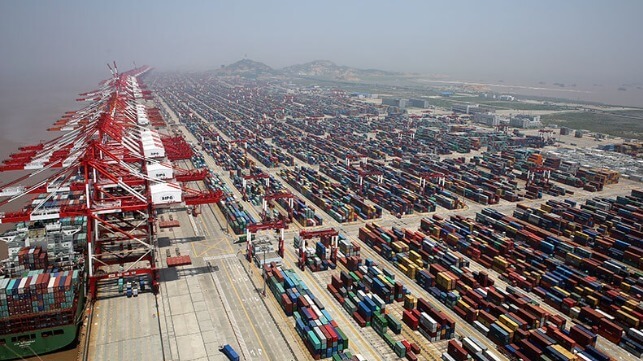
The International Monetary Fund (IMF) has released a report projecting a significant reduction in both global trade volume and economic growth due to the continuation of current U.S. tariff policies. The IMF revised its forecast for 2025, slashing its trade growth prediction from 3.2 percent to 1.7 percent. Similarly, the global economic growth outlook has been adjusted from 3.3 percent in 2024 to 2.8 percent in 2025, indicating a slowdown but not a recession. The United States, as the focal point of the tariff negotiations, is expected to face the steepest decline in growth, with forecasts reduced from 1.8 percent to 0.9 percent.
This grim forecast is predicated on the assumption that the Trump administration will maintain its existing tariff plans, including a “reciprocal” tariff list impacting most foreign trading partners. However, the future of these tariffs is uncertain, as the administration has frequently modified its stance on the final terms.
Following a sharp decline in U.S. markets, Treasury Secretary Scott Bessent expressed at a private JP Morgan gathering that the ongoing trade war with China is “unsustainable.” The tariffs on Chinese goods have reached an extraordinary rate of 145 percent, met by China’s retaliatory tariff of 125 percent. Bessent’s comments seemingly alleviated market concerns, as stock prices rebounded following his statement.
In parallel, White House press secretary Karoline Leavitt announced the administration is reviewing 18 trade proposals and will engage with 34 countries regarding trade this week. However, formal talks between President Trump and Chinese President Xi Jinping have yet to occur. Trump indicated a willingness to negotiate amicably with China, stating, “We’re going to be very nice,” yet emphasized that China needs to make a deal for continued access to the U.S. market.
Despite these overtures, China’s government has issued a warning against any negotiations that compromise its interests, characterizing such actions as destructive to both parties involved.
Overall, the prevalence of looming U.S. tariffs, combined with China’s firm stance, poses a complex challenge in the global economic landscape. The uncertainty surrounding trade negotiations and tariff policies could contribute to a material decline in both international trade and economic growth in the near future.
Source link