Effective cooperation between the Self-Defense Forces (SDF) and the Japan Coast Guard (JCG) is crucial for national security, especially during crises. Both organizations must have predefined plans and protocols to function optimally in such scenarios. It’s important, however, that the JCG maintains its identity as a civilian organization and is not perceived as a military entity. This distinction helps prevent it from becoming a target during conflicts.
The JCG, functioning under the Ministry of Transport, acts as the “police of the sea,” ensuring maritime security, protecting Japan’s territorial waters, and conducting rescue operations. During instances of armed attack, Article 80 of the SDF law allows the JCG to operate under the command of the defense minister, a provision in place since the SDF’s inception but without established protocols until recently. New guidelines were formulated to formalize this relationship, emphasizing that the JCG’s responsibilities would largely align with peacetime operations during a crisis.
The government asserts that the JCG will not merge with the SDF or function as a military organization. This stance is supported by Article 25 of the JCG law, which prohibits its personnel from being organized or trained as armed forces. Although some lawmakers in the ruling Liberal Democratic Party advocate for expanding the JCG’s capabilities, the government remains committed to distinguishing the roles of the two organizations.
In terms of operations, the SDF will focus on combat while the JCG will handle evacuations and life-saving actions at sea. Acknowledging the complexities of a security emergency, the government warns of the challenges in differentiating between combat and non-combat zones.
To prepare for potential conflicts, the SDF and JCG will conduct joint exercises, including tabletop simulations and field drills. These exercises aim to enhance intelligence gathering, decision-making, and communications between the two forces.
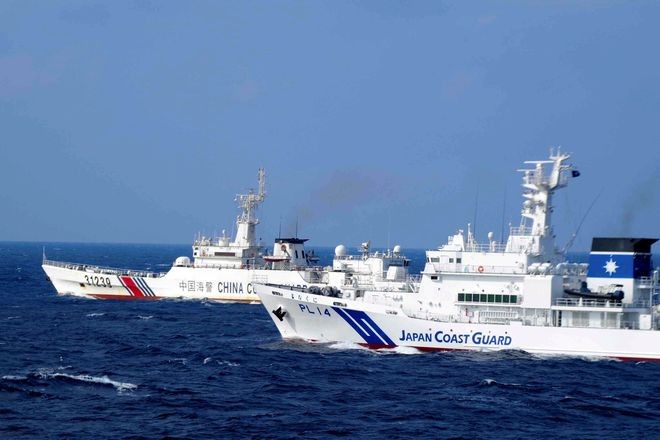
Heightening concerns stem from China’s increasing maritime presence, particularly around the disputed Senkaku Islands, where JCG vessels frequently encounter Chinese coast guard ships. In response, the government plans to bolster the JCG’s fleet and capabilities. However, maintaining the non-military nature of the JCG is vital; compromising this could risk escalating tensions and jeopardizing the JCG’s long-standing role as a stabilizing presence.
The government must navigate carefully to uphold the clear distinction between the JCG and SDF while ensuring that the JCG is adequately equipped to fulfill its responsibilities. This approach not only protects the integrity of the JCG’s operations but also supports Japan’s broader security framework amidst evolving regional challenges.