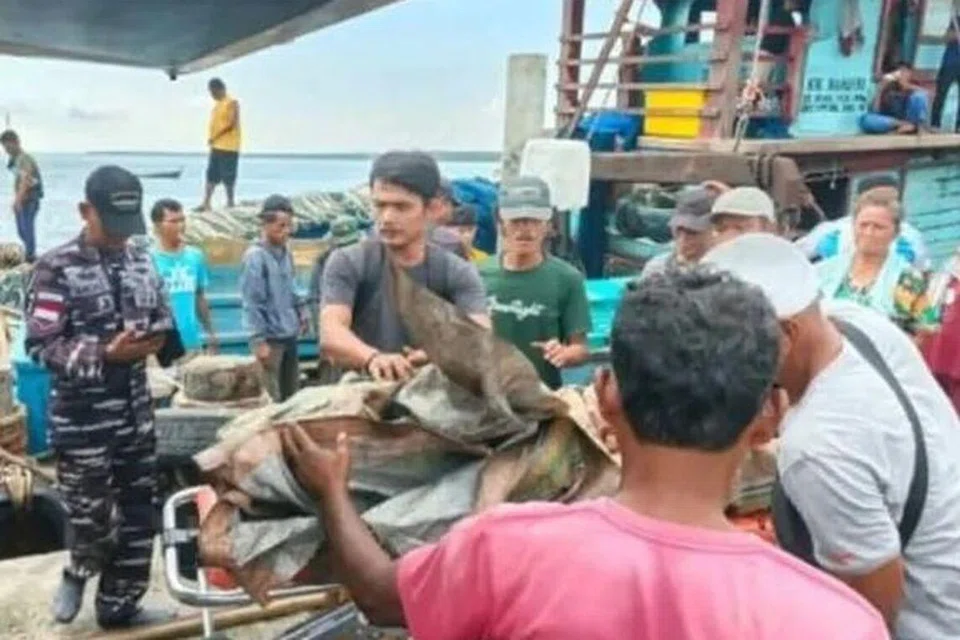
On April 7, a tragic fire aboard the fishing vessel KM Sumber Indah II in the Malacca Strait resulted in the deaths of three fishermen, with five others still missing. At the time of the incident, 21 crew members were on board. The victims, identified as Iyan, Jahar, and Buitin, lost their lives amidst a series of explosions that led to the vessel’s destruction.
The KM Sumber Indah II had set sail from Belawan Port on the afternoon of April 6, halting approximately 25.75 kilometers from the coast to fish for anchovies. Around 2 a.m., the crew experienced an overheating engine, leading to an initial explosion. This was quickly followed by a second explosion from a stored 12-kilogram liquefied petroleum gas canister, which exacerbated the fire’s spread across the ship.
In a desperate attempt to rescue themselves, crew members jumped into the sea as the blaze grew more intense. Approximately 30 minutes after the fire began, the nearby KM Mandiri arrived to aid the situation, managing to rescue 13 individuals and recover three bodies from the water. Among the survivors, two sustained minor burns. The rescue vessel transported those rescued back to Belawan Port by 8 a.m.
Search efforts for the missing fishermen—four of whom have been identified as Aris, Roy, Lubis, and Ambon—are ongoing, with the navy and the National Search and Rescue Agency leading the operations. Meanwhile, local police are conducting investigations to determine the fire’s cause. The surviving fishermen are being questioned, and the wreck of the KM Sumber Indah II is being towed back to port for further analysis.
This incident has reignited concerns about maritime safety within North Sumatra’s fishing sector, particularly in light of a similar boat fire in Belawan in November 2025. During that earlier incident, firefighters struggled for four hours to bring the fire under control, emphasizing the dangers associated with mechanical failures and onboard fuel sources in such routine operations.
The tragedy underscores the inherent risks faced by fishermen in Indonesia’s busy maritime environments and highlights the urgent need for enhanced safety protocols. It calls for improved safety checks, better emergency procedures, and stricter regulations regarding hazardous equipment at sea. The incident resonates not only with the local fishing community but also reflects broader maritime safety challenges in one of the world’s busiest waterways, raising awareness among both Indonesian and Singaporean stakeholders about the critical need for reform.
Original publication date: [original_date]