
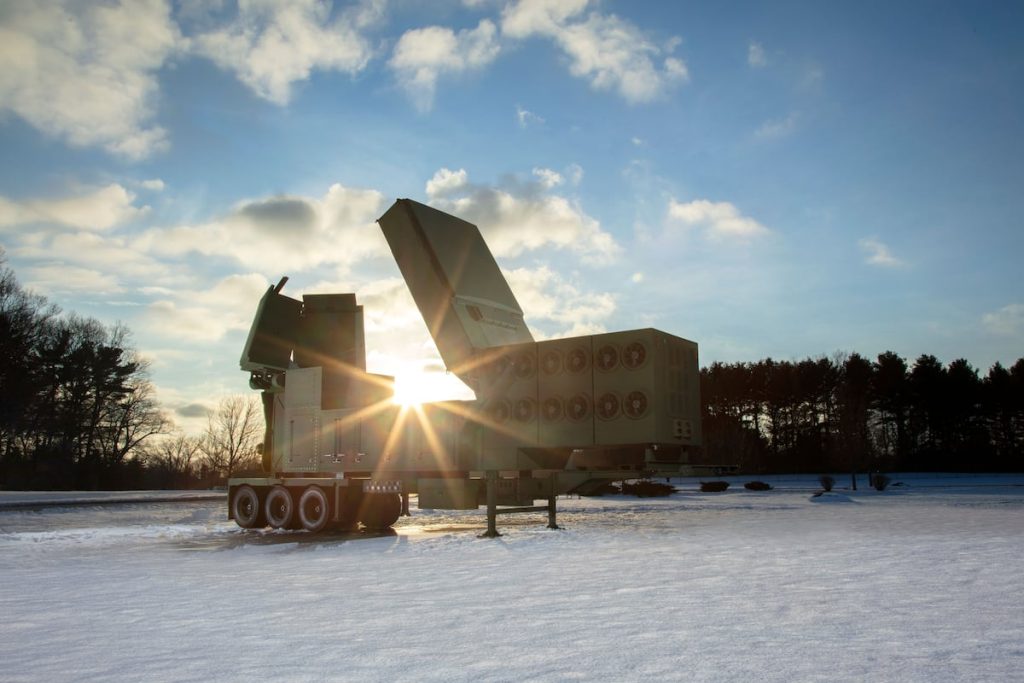
In an effort to bolster its defense capabilities, the U.S. Army is deploying advanced air and missile defense systems to the Pacific and Europe. Maj. Gen. Frank Lozano, the program executive officer for missiles and space, revealed that notable regional deployments include two Lower-Tier Air and Missile Defense Sensors (LTAMDS) being sent to Guam. This is part of a broader strategy encouraged by Army Chief of Staff Gen. Randy George to test updated air defense technologies in operational environments, even while they remain in the prototype stage.
The LTAMDS radars, developed by Raytheon, are designed to enhance air and missile detection capabilities, allowing for 360-degree threat assessment. After successful tests over the past year, the Army is making preparations to ship these radars to Guam, with the first two expected to arrive by June. A third radar is slated for deployment by 2027, contributing to a comprehensive defense architecture on the island.
Additionally, the Army will deploy an Indirect Fire Protection Capability (IFPC) platoon, equipped with prototype launchers, to South Korea. This initiative aims to develop a composite air- and missile-defense battalion, led by Brig. Gen. Pat Costello. The IFPC system, engineered by Leidos, is capable of tracking and neutralizing threats such as cruise missiles, drones, and artillery. It currently employs AIM-9X missiles, although the Army is exploring alternative interceptor options.
The Army is also enhancing its existing Patriot air defense capabilities in Europe. A pre-low-rate initial production version of the Integrated Battle Command System (IBCS), a new command-and-control framework for the Patriot systems, is being sent to modernize the 5-7 Patriot Air Defense Battalion stationed in Europe. This equipment is expected to arrive next month, marking the first deployment of IBCS capabilities outside the U.S., following its previous introduction to Polish forces in 2023.
Through these deployments, the Army aims to ensure that its air and missile defense technologies remain effective and adaptable in potential conflict zones, reinforcing U.S. military readiness amidst evolving global threats.
Original publication date: [original_date]