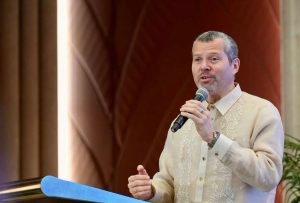

In an interview with Juliana Taiwo-Obalonye, Hon. Ibrahim Zailani, a former Attorney General of Bauchi State and experienced politician, provides critical insights into Nigeria’s political landscape as it heads towards the 2027 elections. He emphasizes that the elections will be shaped by significant divisions based on regionalism, tribalism, religion, and the North-South dichotomy. Zailani believes that the past three years under President Bola Ahmed Tinubu have altered political dynamics significantly compared to earlier evaluations based on the 2023 elections.
Zailani critiques Tinubu’s governance, questioning whether his success in Lagos can translate to a national level. He urges a fair and equal political approach considering the prevalent issues of poverty and insecurity. He is particularly skeptical about the effectiveness of political shifts, such as defections, in changing the electoral outcome.
Focus then shifts to the political tensions in Rivers State, where Zailani comments on the challenges faced by Governor Fubara against the statistically stronger political figure of former Governor Wike. He argues that a supportive intervention from Federal levels is essential, particularly because Fubara’s shift to the APC was motivated by a need for protection.
Regarding the ruling APC, Zailani mentions that the party may be struggling to navigate upcoming challenges, contrasting it with the weakened state of the Peoples Democratic Party (PDP) and Labour Party. He notes that independent candidates could bring much-needed credibility into the electoral process and advocates for reforms to support such candidacy.
On the topic of women’s representation in politics, Zailani expresses skepticism about reserved seats in the National Assembly, describing it as impractical within a democratic context. He encourages women to compete directly in elections rather than seeking designated quotas.
Zailani raises concerns about Nigeria’s ongoing security issues, particularly Boko Haram. He argues that insecurity is a long-standing challenge exacerbated by governmental lethargy. While he acknowledges U.S. assistance as beneficial, he underscores the need for comprehensive domestic efforts to address security effectively.
His commentary on economic policies reflects caution, particularly regarding taxation and reforms. Zailani asserts that fighting corruption should be the primary focus to improve Nigeria’s socio-economic landscape, and he calls for renewed attention to the constitutional provisions regarding anti-corruption measures.
Regarding electoral reforms, he advocates for synchronized election dates to reduce rigging, while also addressing the complexities of introducing electronic voting given Nigeria’s infrastructural and educational challenges. Zailani supports local government autonomy to enhance governance and independence.
Ultimately, he believes that as Nigeria approaches the 2027 elections, leaders must prioritize issues related to poverty, insecurity, and national unity to secure a favorable perception from the electorate. The upcoming elections will serve as a crucial litmus test for both leadership effectiveness and public response to governance.
Original publication date: [original_date]