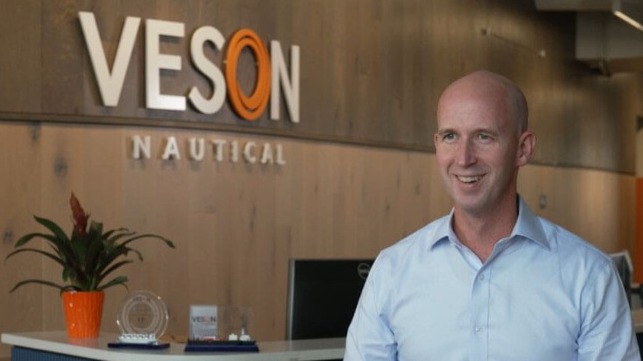
In a recent interview, Kevin Baxter, Veson Nautical’s new communications lead, engaged with Sean Riley, the company’s President and COO, discussing how Veson is equipped to address the escalating complexities and risks in maritime freight.
Sean Riley, who embarked on his career in strategy consulting and transitioned through various roles in supply chain software, found his way to Veson Nautical through a connection with the company’s founder, John Veson, culminating in over twelve years of collaboration. Veson, a software and data company specializing in maritime operations, originally focused on enterprise software platforms for managing bulk marine freight operations. Recognizing that their clients required not just software but integrated data for decision-making, Veson expanded its offerings by acquiring four data companies to provide clients with timely, high-quality data.
A critical concept introduced by Veson is “compounding complexity,” which highlights the increasing risks from factors such as new regulations, geopolitical events, cybersecurity threats, and environmental concerns like decarbonization. Riley emphasizes that these challenges combine to create significant ambiguity and uncertainty for clients, underscoring the importance of contracts in maritime business decisions. He notes that while complexity in contracts is not new, external factors add layers of complication, raising risk exposure for companies.
To navigate these challenges, maritime businesses must embrace a proactive approach to risk management. Rather than attempting to eliminate risk entirely, companies should focus on understanding and effectively managing it. Veson advocates using digital tools and data to evaluate risks, with automation and AI enhancing decision-making processes such as claims management.
The notion of “decision advantage” revolves around successfully managing complexities and maximizing profits. This encompasses creating clarity through the best data and algorithms while transitioning from a reactive to a proactive mindset. With the exponential increase in available data, effective data management becomes essential.
Veson leverages AI technology across its tools to enhance human performance. For instance, AI-powered document parsing is being integrated into their IMOS platform, enabling the analysis and standardization of unstructured claims data. The intention is to empower clients to assess variables like fuel impact on emissions and overall voyage performance in real time.
Collaboration emerges as a vital strategy in the maritime sector, shifting from opacity to transparency. By fostering collaboration, companies can efficiently execute contracts and share valuable data, thereby enhancing supply chain visibility and benefitting the entire ecosystem.
With sustainability and regulatory compliance gaining urgency—exemplified by initiatives like the European FuelEU regulations—clients are increasingly seeking tools to assess these changes. Veson provides resources for evaluating regulatory impacts at multiple operational levels, enabling informed decisions regarding fuel, route planning, and compliance.
Looking ahead, Veson Nautical is excited about innovative product developments that integrate data, AI, and collaborative capabilities. The recent launch of IMOS X, designed for modern mobile use, reflects their commitment to providing real-time data for enhanced decision-making. Upcoming releases are set to further propel client capabilities, positioning Veson as a leader in navigating the maritime industry’s evolving challenges.
In summary, Veson Nautical is helping maritime businesses confront the mounting challenges of complexity and risk through improved technology, enhanced data capabilities, and a focus on collaboration and sustainable practices.
Source link