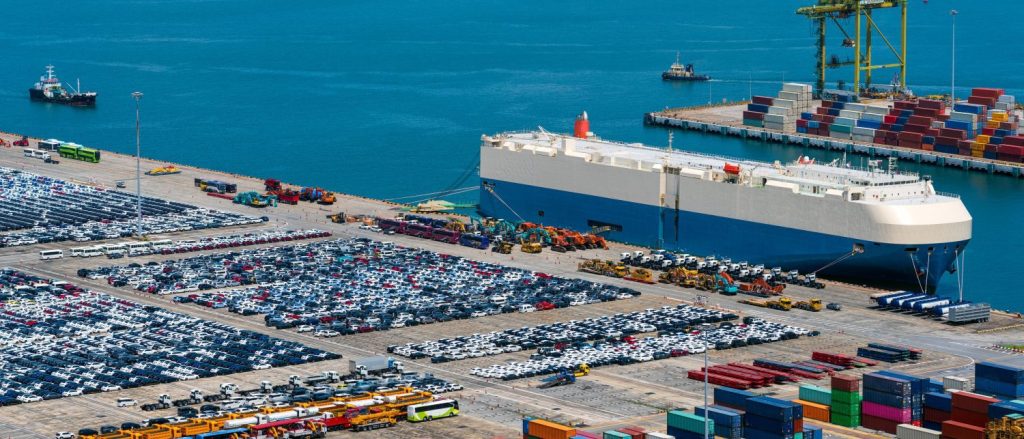
The imposition of President Donald Trump’s tariffs has significantly impacted auto imports to the U.S., leading to a substantial reduction in both auto parts and finished vehicle shipments. Data from Descartes Datamyne reveals a 14.7% year-over-year decrease in the import volume of auto parts and accessories, which translates to a loss of approximately 119,100 metric tons. Similarly, finished vehicle shipments fell by 8.9%, equating to around 52,911 metric tons, or about 26,000 vehicles.
In response to these tariffs, which impose a 25% duty on imports, many automakers are choosing to postpone shipments and are holding inventory offshore. This strategic delay likely stems from hopes that potential policy changes by the Trump administration could alleviate some of the financial pressures associated with these tariffs, helping manage overall supply chain costs.
Notably, the maritime shipping data does not account for overland imports from neighboring countries like Canada and Mexico, but it does include shipments from Europe and Asia, processed through roll-on/roll-off vessels and shipping containers. The data focuses on specific harmonized tariff codes pertaining to auto parts, accessories, and vehicles designed for transporting persons.
Currently, automotive manufacturers are adopting a cautious approach, preparing for possible policy amendments. Typically, they aim to maintain an inventory equivalent to 60 days of sales on dealer lots, along with an additional 15 vehicles in transit. As of April, the national average inventory sat at 66 days’ worth, just shy of the 75-day benchmark the industry considers optimal. Although some dealerships still have a decent stock of vehicles—particularly those imported before the tariffs took effect—this number is expected to decline further in the coming months due to the slowdown in shipments.
Interestingly, despite the hefty tariffs, the average vehicle price increased only modestly—by 2.5% in April. Dealerships seem to be managing the price adjustments carefully, gradually increasing costs as they deplete their pre-tariff inventory to avoid abrupt price hikes that could shock consumers.
It’s important to note that Descartes Datamyne recently provided updated information to CBT News, which clarified previous reports that had overstated the decline in U.S. auto imports from marine shipping.
In summary, the combination of tariffs and strategic inventory management is shaping the current automotive landscape, leading to a decrease in imports and an adjustment in dealership inventory while maintaining relatively stable vehicle prices. Future months will be critical in determining how automakers navigate these economic pressures and respond to changing policy landscapes.