On July 4, 2025, a tragic ferry disaster occurred when the Tunu Pratama Jaya sank in the Bali Strait, resulting in at least six fatalities and dozens of missing individuals. The vessel, which departed from Ketapang Port in Banyuwangi, East Java, was transporting 53 passengers and 12 crew members. Just 24 minutes into its journey, the ferry reported a leak in its engine room. By 11:35 PM, it had lost all power and capsized approximately 2.7 kilometers from its departure point.
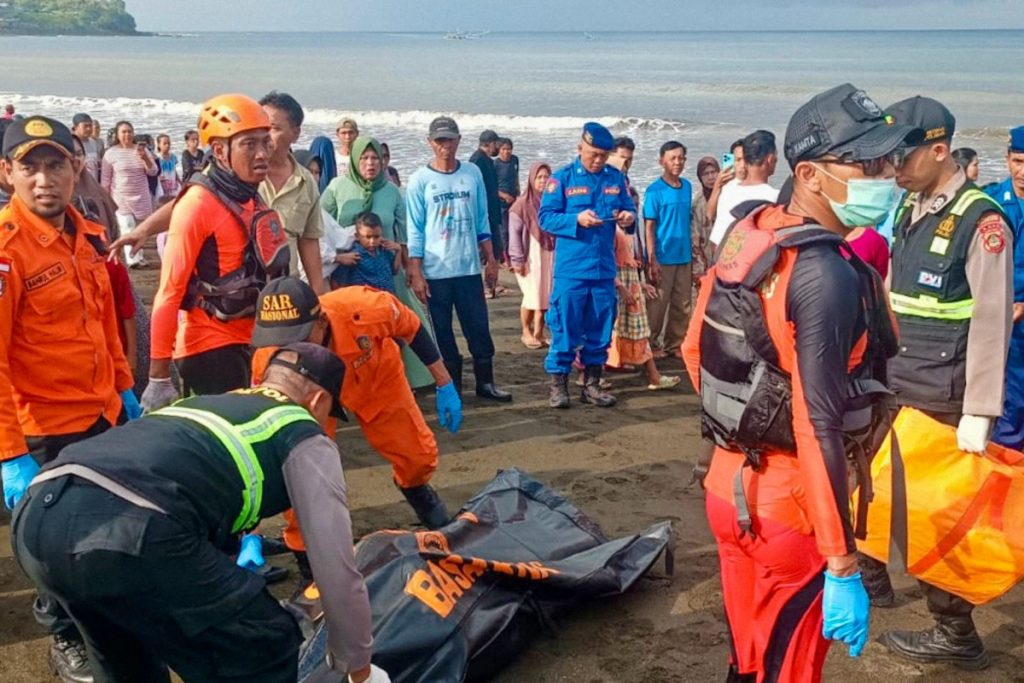
A coordinated rescue operation comprising Search and Rescue personnel from Bali and East Java, alongside local military units, police, and volunteers, was initiated early Thursday morning. According to Air Vice Marshal Mohammad Syafi’i, head of the National Search and Rescue Agency, 30 survivors were found, but the operation faced challenges due to strong currents and waves measuring up to 2.5 meters. Efforts included deploying 13 underwater rescue specialists, nine ships, and a helicopter to aid in the search for both survivors and wreckage.
The survivors were located along Bali’s southern coast, thanks to local fishermen who aided in the rescue. The deceased individuals were taken to Negara Regional Hospital for identification and examination. The head of the Surabaya Search and Rescue Agency, Nanang Sigit, reported that most survivors either swam to safety or were rescued by fishermen operating in the area.
The incident prompted an investigation led by the National Transportation Safety Committee (KNKT). Head investigator Soerjanto Tjahjono indicated that the primary focus would be to verify prior reports concerning the ferry’s leak and to assess its docking records and maintenance history. He pointed out that this was not an isolated event in the Bali Strait, citing previous ferry disasters, including the sinking of the Rafelia 2 ferry in March 2016 and the Yunicee ferry in December 2021, both of which resulted in similar fatalities.
Experts highlighted the hazards of the Bali Strait, known for its strong and unpredictable currents caused by tidal influences from the Indian Ocean and Java Sea. Setyo Nugroho, dean at the Faculty of Marine Technology at Sepuluh Nopember Institute of Technology, pointed out that 80% of maritime accidents involve cargo-related issues and are often compounded by technical failures and human error. While he stated that Indonesia’s maritime safety regulations are adequate on paper, their enforcement and compliance present significant challenges.
Overall, authorities and experts emphasize the need for a thorough investigation to prevent future accidents and improve maritime safety, drawing attention to systemic issues that have led to numerous maritime tragedies in the region.
Source link