During India Maritime Week 2025, the Prime Minister introduced transformative initiatives aimed at advancing growth and sustainability in the maritime sector, which plays a critical role in the nation’s economy. Key highlights of the event include the launch of the Maritime Investment Roadmap, inviting Singapore to participate in a ₹1 lakh crore strategy focused on shipbuilding, port modernization, and green fuel collaboration.
Major Initiatives:
- Digi Bandar: This national framework aims to digitize India’s ports, making them data-driven, AI-enabled, and interconnected, which is expected to enhance efficiency, safety, and transparency.
- Green Tug Programme: Targeting the deployment of 100 eco-friendly tugs by 2040 with an investment of approximately ₹12,000 crore, this initiative supports a transition to cleaner maritime logistics.
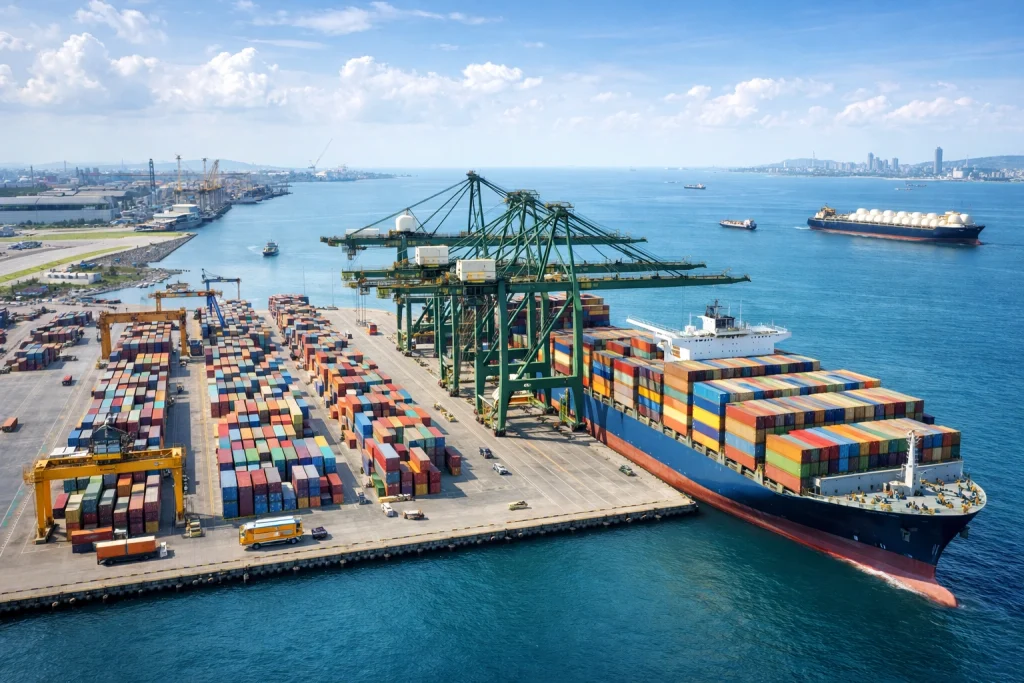
The importance of India’s maritime sector cannot be overstated. Approximately 95% of India’s trade by volume and 70% by value transits through maritime routes. Major ports handled around 855 million tonnes of cargo in FY 2024–25, and the port capacity has expanded significantly. Notably, the average turnaround time for vessels at major ports has halved, demonstrating improved productivity and competitiveness.
Inland waterways have also seen significant enhancements, increasing from 3 to 29 operational routes, with a 710% rise in cargo movement since 2014. Furthermore, India’s seafarer workforce has tripled, now comprising about 12% of the global seafaring community, positioning India as a major supplier of trained personnel.
However, the maritime sector faces challenges, including connectivity bottlenecks impacting last-mile access to ports, limited transshipment capabilities, and concerns over high taxation on larger vessels. Additionally, India’s shipbuilding share in the global market remains low at 1%, as it relies heavily on imported marine engines.
To address these issues, programs like Maritime India Vision 2030 (MIV 2030) and the Sagarmala Programme have been initiated. These frameworks encompass strategies for improving logistics efficiency, port development, and enhancing sustainability. The MIV 2030 aims for India to emerge as a global maritime powerhouse through ten pivotal themes.
India is also focusing on decarbonization in the maritime sector, as maritime transport contributes around 3% of global GHG emissions. The Indian Ports Act 2025 introduces strict adherence to global environmental standards and pollution control measures. Initiatives such as the Green Tug Transition Programme and the Harit Nauka Initiative promote the adoption of green technologies in maritime operations.
In conclusion, India’s maritime sector is transitioning from merely supporting trade to becoming a strategic engine for economic growth and sustainability. With advancements in port efficiency, expanded inland waterways, a competitive seafaring workforce, and a commitment to ecological responsibility, India is advancing toward a more sustainable and self-reliant maritime future, embodying the principles of Atmanirbhar Bharat while addressing climate challenges.