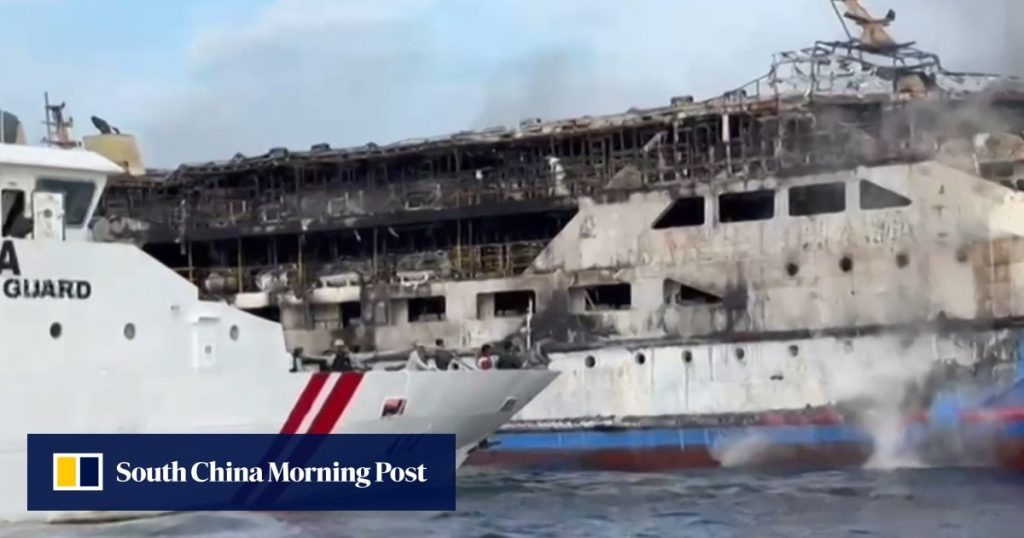
A tragic ferry fire in Indonesia has once again brought attention to the urgent need for reform in the country’s maritime transport sector. This incident occurred on Sunday when the KM Barcelona V ferry, carrying over double its declared capacity, caught fire off Talise Island near Sulawesi. This disaster resulted in at least five fatalities, as many passengers were forced to jump into the sea. The ferry was en route from the remote Talaud Islands to Manado in North Sulawesi, and there were significant discrepancies in the passenger numbers, with 571 individuals aboard compared to the official manifest, which stated just 280 passengers and 15 crew members.
The fire is part of a worrying trend in Indonesia, which has seen multiple maritime disasters this month alone. The archipelago, comprising over 17,000 islands, heavily relies on ferries and boats for inter-island transportation, making safety in this sector critical. In addition to the ferry fire, another recent incident involved a speedboat in West Sumatra that capsized due to rough sea conditions, which also exposed issues of overcapacity and insufficient safety measures—the vessel, intended for ten passengers, was carrying eighteen and lacked proper communication equipment or permits.
These incidents highlight systemic issues in Indonesia’s maritime safety regulations, compounded by aging fleets and weak enforcement of existing laws. Analysts are attributing the recurring tragedies to overcapacity, inadequate maintenance of vessels, and lapses in safety protocols. The government faces mounting pressure to address these challenges effectively, as the frequency of such disasters poses a significant threat to public safety and undermines confidence in maritime travel.
There is a consensus among experts that sweeping reforms are necessary to enhance maritime safety standards. Potential measures include better regulation of passenger limits, improved vessel inspection processes, and stricter enforcement of existing safety laws. The reliance on ferries as a primary means of transport underscores the critical need for a robust maritime infrastructure that not only prioritizes economic efficiency but also ensures the safety and well-being of passengers.
In summary, the deadly ferry fire ignites a renewed call for comprehensive reforms within Indonesia’s maritime sector, revealing serious safety deficiencies that must be addressed to prevent further tragedies.