The Asia fire-retardant wood market is experiencing substantial growth, transforming from a niche segment to a vital component in construction, driven by stringent regulations, urbanization, and sustainable building practices. This market is particularly relevant for enhancing passive fire protection in high-rise buildings, public infrastructure, and industrial facilities, where safety codes are becoming increasingly rigorous. The projected analysis for 2026 suggests robust growth continuing through 2035, with variations in adoption rates across different Asian nations.
Market Dynamics
The demand for fire-retardant wood is primarily anchored in the continuous development of the construction industry, especially in regions with mature regulatory frameworks like Japan, South Korea, Australia, and emerging urban centers in China and Southeast Asia. The competitive landscape reveals a split between multinational corporations that supply advanced fire-retardant chemicals and a diverse range of local companies involved in wood treatment.
Key themes shaping the future market include technological advancements in intumescent coatings and the integration of fire-retardant properties with other wood modifications, leading to multifunctional products that hold premium value.
Supply Chain Structure
The supply chain for fire-retardant wood involves multiple stages—from chemical formulation to wood treatment and final distribution. Treatment processes like pressure impregnation with chemicals enhance wood’s fire resistance but require precise control over several factors. Key species used for treatment include Radiata Pine and locally sourced woods. Regions like Malaysia, Indonesia, and New Zealand serve as production hubs due to their timber resources and established industries.
Trade and Logistics
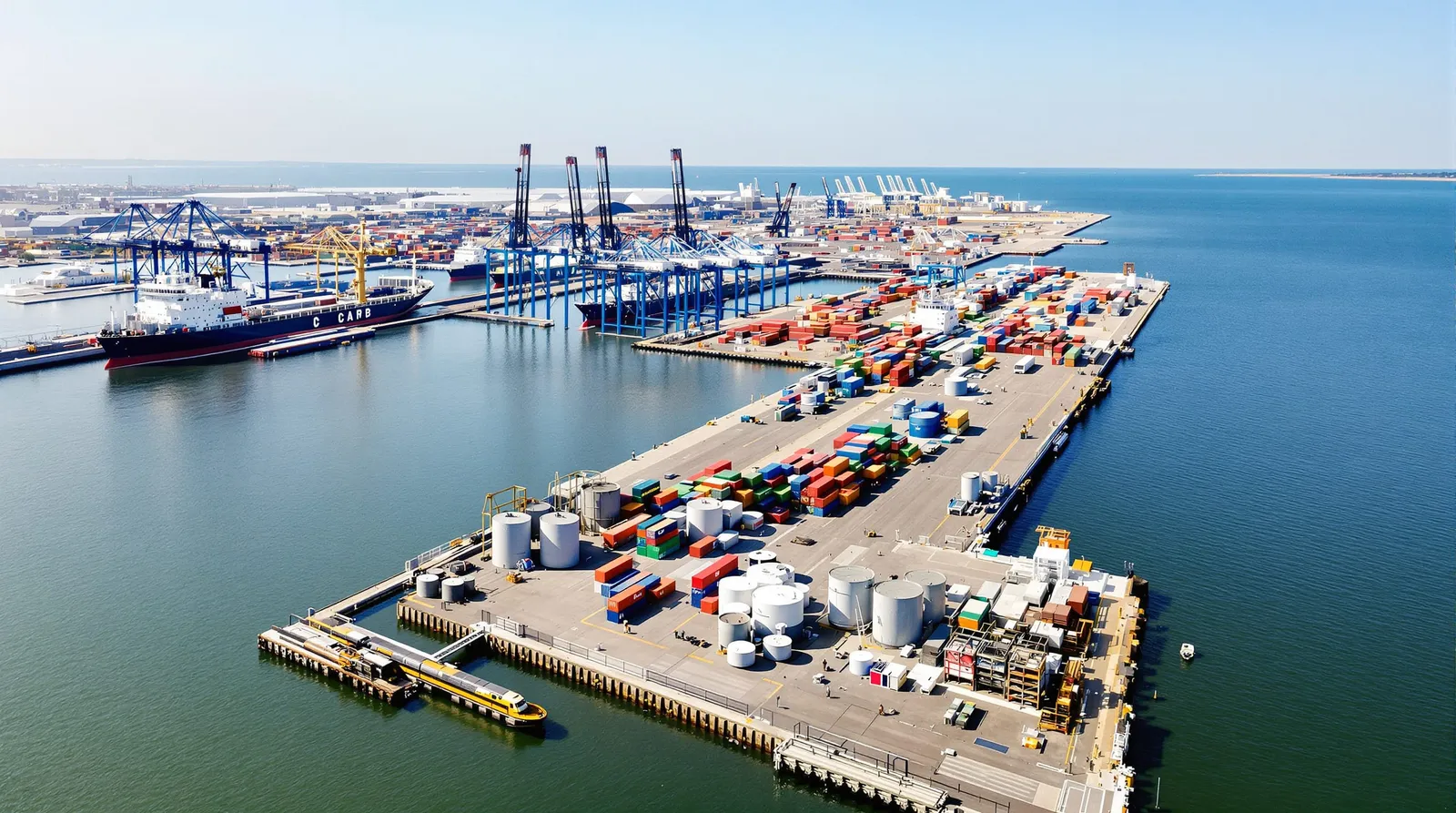
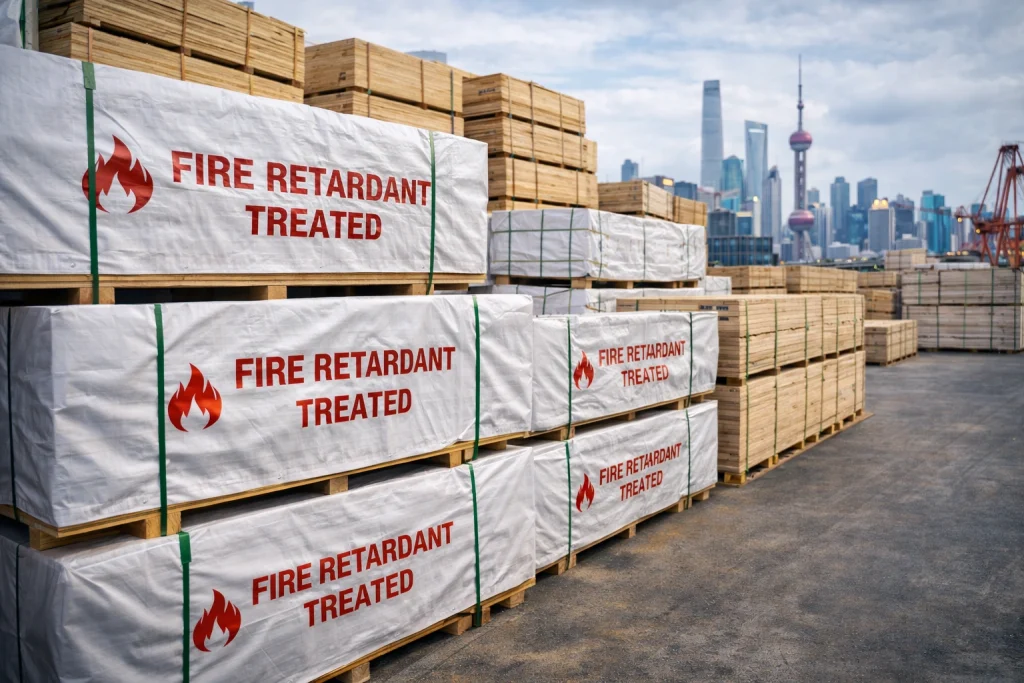
International trade plays a crucial role in the movement of both raw and treated wood products. Major timber-exporting countries, such as New Zealand and Australia, provide untreated timber to treatment hubs like China. The logistics of handling fire-retardant wood necessitate careful storage and transportation to prevent damage and ensure regulatory compliance. The complexities of trade are influenced by varying certification standards, impacting costs and market accessibility.
Pricing Dynamics
Pricing of fire-retardant wood reflects various costs, including raw material prices and the treatment process. Fire-retardant wood generally commands a significant premium over untreated wood, justified by its life-safety features and regulatory compliance. Price sensitivity varies, with commercial projects being less price-sensitive compared to residential clients, making the market dynamics complex and multifaceted.
Competitive Landscape
The competitive environment involves both global chemical suppliers and a fragmented base of wood treatment firms. Strategies differ across players—some focus on long-term contracts and investing in certification, while others innovate in developing next-generation treatments.
Future Outlook
Looking ahead to 2035, the Asia fire-retardant wood market is expected to undergo significant transformation fueled by ongoing urbanization, regulatory changes, and a focus on sustainability. Stakeholders will need to adapt by investing in efficient production processes, multifunctional wood products, and leveraging advances in greener chemical solutions. For investors and new entrants, opportunities lie in bridging gaps in under-served markets and enhancing supply chain efficiencies. Ultimately, fire-retardant wood will evolve from a supplementary safety feature to a requisite element of modern construction practices in Asia, signifying a shift toward safer, more sustainable built environments.
Original publication date: [original_date]