UPSC Current Affairs – 20 April 2026 Summary
Fertilizer Challenge Amid the Iran War
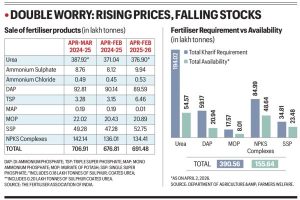
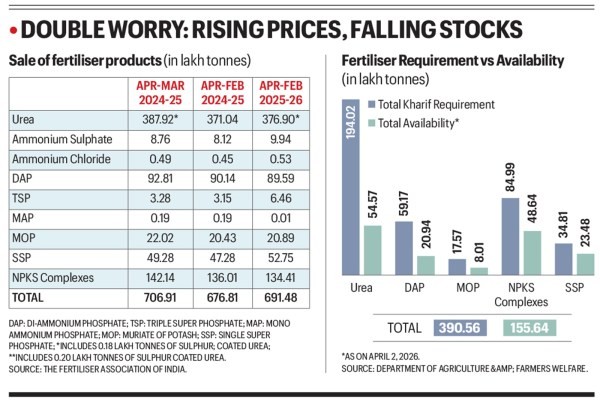
The conflict involving the US, Israel, and Iran has led to significant disruptions in maritime supply chains, particularly affecting India’s fertilizer market. The Strait of Hormuz’s closure has resulted in soaring prices for urea, with bids jumping from $510 per tonne to $950 per tonne between February and April 2026. India, heavily reliant on imports for both urea and Liquefied Natural Gas (LNG) for domestic fertilizer production, is facing a severe supply gap, with stocks falling dramatically short of the required 19.4 million tonnes for the Kharif season.
Efforts to mitigate the crisis include diversifying import sources for raw materials and issuing emergency tenders to secure stocks. However, several challenges, such as increased logistics costs, domestic production bottlenecks, and the risk of black-market activities, threaten food security. Moving forward, India aims to explore fortified fertilizers, biostimulants, and alternative nutrient sources to bolster agricultural resilience.
Accelerating High-Value Crop Diversification
The Union Budget of 2026-27 has emphasized a strategy for diversifying agriculture towards high-value crops (HVCs) across India’s diverse regions. HVCs, such as fruits, vegetables, and spices, yield higher returns than traditional crops. India ranks second globally in coconut production and has shown notable growth in horticultural outputs.
The government aims to bolster this sector through region-specific strategies: promoting coconut in coastal areas, agarwood in the Northeast, and walnuts in hilly regions. Challenges include high initial investments and perishability of products, requiring enhanced infrastructure and market access for farmers. Successful implementation could transform small-scale farmers into global entrepreneurs, aligning with the government’s vision of increasing farmers’ income.
G20 Satellite Initiative
The Indian Space Research Organisation (ISRO) plans to launch a collaborative G20 Satellite by 2027, aimed at climate monitoring and environmental management. This initiative underlines India’s role in global space diplomacy while fostering cooperation among G20 nations in addressing climate change and disaster preparedness.
Key Government Initiatives
-
Bharat Maritime Insurance Pool (BMI Pool): Launched to provide comprehensive insurance coverage for Indian vessels, safeguarding trade amidst geopolitical uncertainties with a ₹12,980 crore sovereign guarantee.
-
Pradhan Mantri Gram Sadak Yojana-III (PMGSY-III): A continuation of the rural road development program to consolidate existing routes and connect rural areas to socio-economic centers, extending through 2028 with a revised budget of ₹83,977 crore.
-
Vishwa Sutra Collection: Showcasing Indian handlooms at the 61st Femina Miss India, this initiative blends local weaves with global design elements, promoting traditional crafts in international markets.
Environmental Concerns
A potential Super El Niño is predicted for 2026-27, threatening to elevate global temperatures and disrupt weather patterns, with serious implications for agriculture in India. This highlights the increasing vulnerability to climate change impacts.
Revised Biological Diversity Act Guidelines
The National Biodiversity Authority (NBA) has revised guidelines to enhance the management of Access and Benefit Sharing (ABS) funds, promoting equitable financial returns from India’s biodiversity while ensuring local communities benefit.
Conclusion
The current affairs of April 20, 2026, illustrate a complex interplay of global conflicts and local challenges impacting India’s agriculture, environmental policies, and economic initiatives. By addressing these issues with innovative strategies and focusing on regional strengths, India aims to bolster its food security and position in the international arena.
Original publication date: [original_date]