
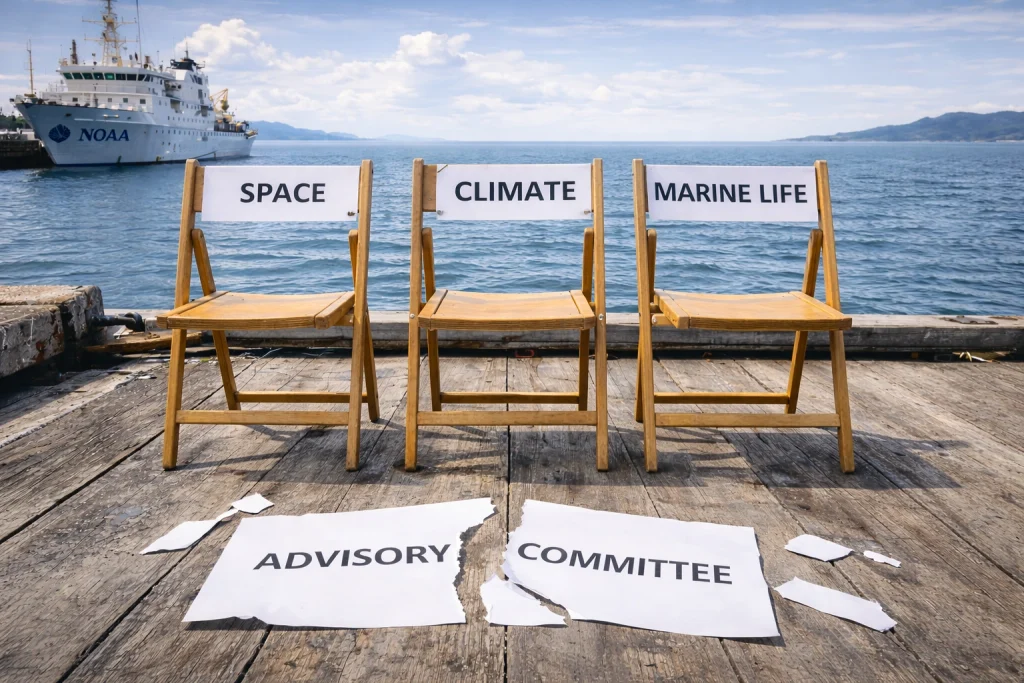
The Trump administration has initiated the disbanding of several advisory committees focused on space, climate, marine fisheries, and coastal area management following a directive from President Trump. This decision stems from the National Oceanic and Atmospheric Administration (NOAA), which stated that these committees have “served their purpose and should be terminated.” The announcement came through a memorandum from Nancy Hann, the deputy undersecretary for operations at NOAA.
The affected committees include:
- Advisory Committee on Excellence in Space
- Climate Services Advisory Committee
- Marine and Coastal Area-based Management Advisory Committee
- Marine Fisheries Advisory Committee
This move aligns with an executive order aimed at eliminating federal advisory committees that are not legally mandated. The Commerce Department’s Office of Privacy and Open Government, which oversees federal advisory committees, will manage the termination process to ensure it is conducted orderly.
The committees being disbanded were established to provide specialized advice in their respective fields. The space committee, founded in 2002, advised NOAA on commercial space sector assessments and space debris management. The climate committee, formed just prior to President Biden’s departure, aimed to enhance NOAA’s data accessibility for climate impacts, such as droughts and floods. Similarly, the coastal management committee, also initiated under Biden, focused on conservation efforts in coastal and marine areas, including the Great Lakes. The fisheries committee, in operation since 1971, provided guidance on policies relating to marine resources, including fish, marine mammals, and other aquatic wildlife.
Before the terminations, committee members were instructed to pause all meetings. A NOAA spokesperson indicated that the decision to terminate was made by the Commerce Department, directing any inquiries to that department, which did not provide additional comments when approached.
Federal advisory committees exist under the 1972 Federal Advisory Committee Act, which allows agencies to solicit advice from external experts, including those from academia and the private sector. The General Services Administration oversees these committees to ensure they remain accessible and objective. There are approximately 1,000 such committees in the federal government, and those not mandated by Congress undergo an administrative review every two years.
Experts, such as Jules Barbati Dajches from the Union of Concerned Scientists, underscore the importance of these committees, asserting they help shield crucial scientific decisions from political bias and ensure public engagement in governmental affairs. Barbati Dajches noted that these committees advise on significant issues affecting public welfare, including environmental health and resource management.
This disbandment follows earlier actions taken by the Trump administration, which included removing members from science advisory committees within the Environmental Protection Agency and mandating that a significant portion of federal advisory committees be dissolved.