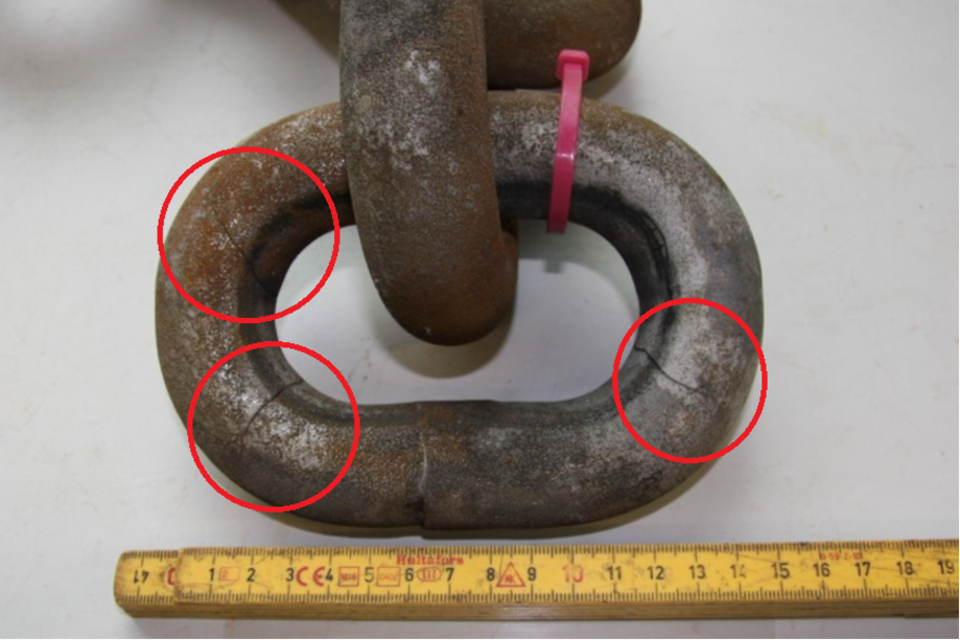
The Merchant Shipping and Fishing Vessels (Lifting Equipment and Lifting Operations Regulations) 2006 mandates that the owners or employers of lifting equipment ensure thorough inspections are conducted at least every 12 months. These inspections should be supplemented by regular checks based on the findings of a company risk assessment, particularly in environments where equipment is subjected to high load, wear, and impact. Common examples of such environments include fishing gear and lifting apparatus typically found on beam trawlers and scallopers.
It is the responsibility of the owners or employers to provide sufficient technical information to competent persons conducting the inspections. This information must enable proper assessment of the lifting equipment in service and define acceptable operating limits. For accurate evaluations, any equipment being inspected should be adequately cleaned. Owners must also adhere to the manufacturer’s instructions when using new, modified, or novel lifting equipment and should consult with manufacturers or suppliers regarding the intended use of these items.
Equipment exposed to potentially dangerous conditions due to deterioration must be inspected regularly by competent personnel. Inspection intervals should be maintained to uphold health and safety standards, allowing for the early detection and remediation of any issues. If any lifting equipment is identified as deficient, it should be removed promptly from operation.
To ensure safety and compliance, owners, operators, skippers, crew, and safety advisors must implement an effective inspection regime for all lifting equipment, especially those subjected to increased wear or load. They should also allow sufficient opportunity for competent persons to assess equipment under suitable conditions, potentially utilizing inspection methods beyond simple visual checks. In line with the manufacturer’s specifications, they must determine appropriate acceptance parameters and adjust inspection frequencies if there is a risk of premature failure.
Additionally, there should be a systematic approach to record all inspections and any changes to lifting equipment to enhance accountability and traceability. It is crucial for owners to ensure compliance with the international labor standards set forth in ILO 188, which mandates the provision of a safe working environment for crews.
In summary, maintaining rigorous lifting equipment inspection protocols is vital to ensure safety aboard fishing vessels. By establishing robust systems and adhering to regulatory requirements, owners and employers can significantly reduce the risk of accidents and ensure compliance with applicable safety regulations. Further guidance on lifting operations can be found in Safety Bulletin 17, which addresses safety concerns specifically related to lifting operations on fishing vessels.
Source link