On Sunday, Iran declared that the Strait of Hormuz will remain accessible to all shipping except vessels associated with its “enemies,” specifically the United States and Israel. This statement comes amid a 48-hour ultimatum issued by U.S. President Donald Trump, demanding a full reopening of this crucial waterway that facilitates approximately 20% of the global crude oil supply. Trump further threatened that failure to comply would result in a serious response from the U.S., including potential attacks on Iranian power plants.
The Strait of Hormuz is a vital global shipping corridor that connects the Persian Gulf with the Gulf of Oman, serving as the only route to the open ocean. Historically, it has allowed nearly one-fifth of the world’s crude oil and liquefied natural gas to transit. However, escalating hostilities in the region, particularly following joint U.S.-Israeli military strikes on Iran beginning February 28, have severely disrupted access to this key passage.
Since the onset of conflict, at least 24 commercial vessels, including 11 oil tankers, have faced attacks or other security incidents in the Gulf and surrounding areas, according to the UK Maritime Trade Operations (UKMTO). Additionally, four attacks claimed by Iran’s Revolutionary Guards remain unverified by international bodies. The International Maritime Organization has reported casualties, with at least eight seafarers and dock workers killed, four missing, and ten others injured throughout the conflict.
As a result of these hostilities, maritime traffic through the Strait of Hormuz has plummeted. Typically, the strait sees about 120 vessel transits per day, but records from March 1-21 documented only 124 total crossings, signaling a remarkable 95% decline. Most of these crossings involved oil tankers and gas carriers heading eastward out of the strait.
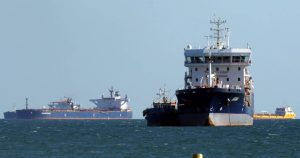
The disruption has left thousands stranded in the region. Reports indicate that approximately 20,000 seafarers, cruise passengers, port staff, and offshore workers are currently overextended, with the International Maritime Organization estimating that there are about 3,200 vessels in the vicinity—two-thirds of which are large commercial ships engaged in international trade. Notably, about 250 oil tankers, representing 5% of global crude tanker capacity, are still present in the Gulf.
The escalating conflict has significantly impacted shipping costs. Ship fuel prices have surged by around 90% since the situation deteriorated, while the cost of transporting a barrel of crude oil has doubled, now hovering around $10. Overall, the unfolding crisis in the Strait of Hormuz highlights the delicate balance of global energy supply and the profound consequences of geopolitical tensions in this strategic maritime corridor.
Original publication date: [original_date]