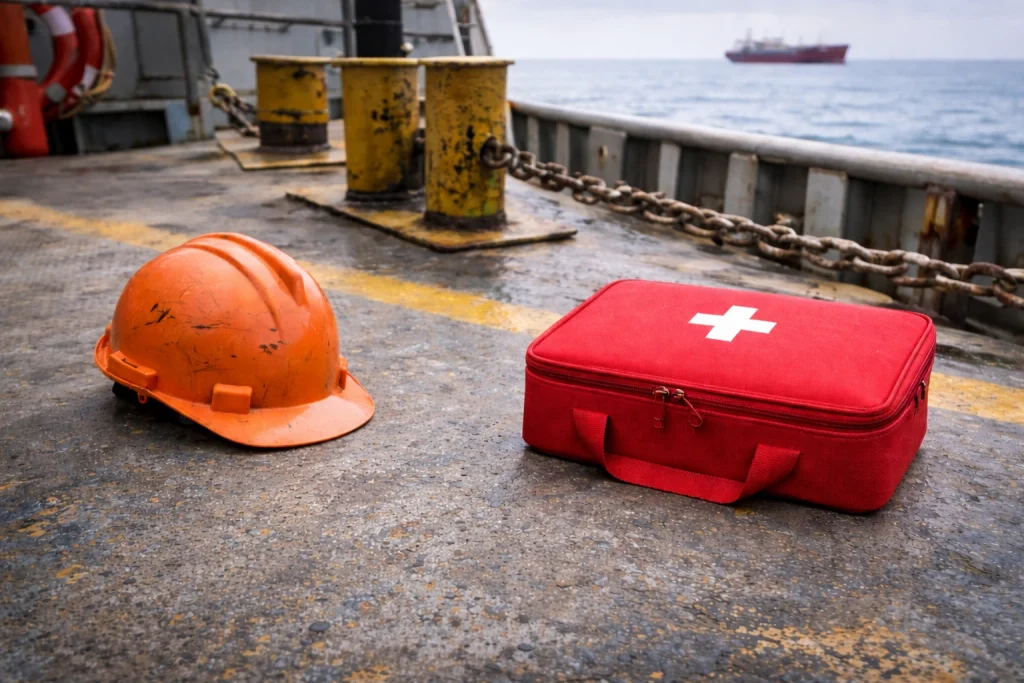
Summary of Occupational Injuries Among Vietnamese Seafarers
Injuries resulting from accidents are a significant global health challenge, causing about 16,000 deaths daily according to the World Health Organization (WHO). Vietnam, in particular, has seen injuries emerge as a leading cause of death in hospitals, often outpacing infectious and non-communicable diseases. The seafaring profession is exceptionally hazardous, characterized by tough working conditions including exposure to extreme weather, physical isolation, and mental stress, contributing to high rates of occupational injuries and diseases.
Research reveals that mortality and injury rates among seafarers are alarmingly higher than those of land-based workers. Specifically, studies on the British merchant fleet indicate that fatal accidents in shipping are 21 times more common than in the general workforce, and seafarers face an even greater risk of death from occupational accidents compared to their land counterparts.
To investigate the injury rates among Vietnamese seafarers, a two-year retrospective study was conducted involving three shipping companies in Hai Phong, Vietnam. The study focused on collecting data about seafarer injuries from various job roles, including deckhands and engine crew. Data collected included age, experience, education, and specifics about the accidents, such as location and cause of injury.
The study analyzed data from 1,250 seafarers, revealing that 46 (3.7%) sustained injuries, resulting in an annual injury incidence of 18.4 per 1,000 seafarers. Notably, injuries predominantly occurred at night (54.3%) on the deck (71.7%), with falling (32.6%) being the most common cause of injuries. The types of injuries were primarily soft tissue (52.2%), followed by sprains and fractures.
Risk factors associated with occupational injuries showed that seafarers with less than 10 years of experience had a 2.45 times higher risk of injury compared to their more experienced counterparts. Similarly, non-officer roles were linked with a higher injury risk due to the demanding nature of their responsibilities. Interestingly, seafarers working on smaller vessels (under 30,000 tons) exhibited significantly higher injury rates, suggesting that cramped working environments exacerbate injury risks.
Further analysis indicated that educational level also affects injury likelihood; seafarers with intermediate education were 2.3 times more likely to be injured than those with university degrees. The findings underscore the need for enhanced training in safety protocols and improvement in living and working conditions on ships.
Overall, the study sheds light on the heightened risks faced by Vietnamese seafarers compared to land workers and emphasizes the need for systematic improvements in occupational safety measures. Addressing factors such as experience, education, and working conditions could mitigate injury rates and enhance the overall well-being of seafarers. The ethical integrity of the study was maintained, and participant anonymity was ensured.